Utilities have no shortage of ways to communicate with customers. However, building strong customer relationships is becoming more challenging than ever. That’s where utility podcasts can make an impact.  

Once considered a niche platform, podcasts are emerging as a powerful communication channel for utilities. In fact, podcasts can increase brand awareness by 24% to 79%, depending on the industry, significantly outperforming many traditional communications.

By combining education, conversation and storytelling, utility podcasts offer a unique opportunity to create more engaging customer experiences.

“Podcasts give utilities something other channels don’t offer – time and a chance to truly connect,” says Chris Loehrer, Questline Digital’s Digital Multimedia Events Manager. “With email or social media, you only have so much space. With a podcast, your audience has already decided to invest time to learn about a topic. That changes everything.”

From Transactions to Conversations

Many utility communications are inherently transactional – designed to inform customers about a program, bill or service update. While these messages are essential, they don’t typically foster an emotional connection.

Instead of one-way communication, utility podcasts create space for more meaningful engagement. Utility communicators can explore topics in greater depth, provide context and highlight the people behind the organization.

Podcasts for utility customer engagement are also less promotional than traditional channels like email, digital ads and bill inserts. The American Marketing Association acknowledges how podcasts can reinforce your marketing message without coming across as too sales minded. Rather than prompting immediate action, they focus on delivering value, giving customers the opportunity to learn without pressure.

“It’s a different mindset,” Loehrer says. “With a podcast, people are there to receive information, not to be asked to take action. That’s actually refreshing for them.”

Podcasts enable utilities to:

  • Build trust through transparency and in-depth conversations  
  • Improve understanding of complex topics
  • Create more human, authentic connections
  • Reach customers in a flexible, on-demand format  

Utility industry podcasting also offers a strong return on investment. A single episode can be repurposed across channels, extending reach and delivering ongoing value long after it’s published.

While podcasts are less promotional in nature, they can still introduce customers to products, programs and services they may not have discovered otherwise. In fact, according to Influencer MarketingHub, 60% of podcast listeners searched for a product after hearing about it during a podcast episode.

“Right now, podcasting is one of the lowest-investment, highest-return opportunities in a utility’s communication strategy,” Loehrer notes.

Meeting Customers Where They Are

Today’s consumers expect flexibility in how and when they engage with content.

Utility podcasts fit seamlessly into modern lifestyles, allowing residential and business customers to listen on their own time, whether commuting, relaxing at home or completing everyday tasks. This makes the experience feel less intrusive and more intentional.

“Podcasts meet customers where they already are,” Loehrer says. “They can tune in whenever it’s convenient, which makes it easier for utilities to stay connected without adding more noise to already crowded inboxes.”

Podcast listeners also tend to be highly engaged. They’ve made a conscious decision to invest time in a topic, which reinforces key messages without contributing to digital fatigue.

This creates an opportunity to integrate podcasts for utility customer engagement into a broader, multichannel strategy. A single episode can serve as the foundation for:

• Social media clips
• Email highlights and newsletter features
• Blog articles and web content
• Short-form videos and promotional teasers

Utility podcasts become a scalable content engine, helping utilities maintain a consistent presence without significantly increasing workload. “One conversation can fuel weeks of content,” Loehrer notes.

How Utility Podcasts Can Simplify Complex Topics

Utilities regularly communicate about complex topics, including rate plans, energy efficiency programs, grid modernization and emerging technologies. These topics can be difficult to explain in a short email or social media post. 

Utility podcasts offer the time and flexibility to break down these topics in an easy-to-understand way. Through interviews, storytelling and real-world examples, podcasts make technical concepts more relatable to both business and residential customers.   

“The utility space is a bit of a mystery to people,” Loehrer says. “A podcast allows you to take a complex, but logical, industry and explain it in layman’s terms. That helps reduce misunderstanding and even some of the emotional reactions that customers may have.”

This increased understanding has a direct impact on customer behavior. When customers feel informed, they are more likely to enroll in a program, adjust their usage habits or take advantage of new technologies.

Authentic and Transparent Conversations   

For many customers, utilities can feel like large, faceless organizations. Utility industry podcasting shifts that perception by creating space for authentic, transparent conversations.

By featuring employees, customers and community partners, utilities can provide a more human view of their organization. These conversations help demystify how utilities operate and highlight the expertise that goes into serving the community.

Beyond internal voices, utility podcasts also open the door to a broader range of perspectives, including local legislators, regulators and government officials. Through conversations with key stakeholders, utilities can provide valuable context around policies, infrastructure investments and sustainability initiatives that directly impact customers.

“Podcasting creates a unique platform for thought leadership — giving utilities the opportunity to bring in legislators, regulators and community stakeholders for meaningful conversations,” Loehrer says. “It’s a chance to provide transparency, ask important questions and connect policy decisions to real customer impact.”

Connecting Utility Podcasts with Your Communications

For utilities, the key to success isn’t just launching a podcast, it’s integrating it into a broader communication strategy.

“A podcast can’t stand alone,” Loehrer explains. “It has to be part of your overall communication strategy — connected to your newsletters, your emails, your social channels. It’s another touchpoint, not a separate effort.”

When approached this way, podcasts for utility customer engagement become a natural extension of existing communications. In fact, some of the most valuable podcast topics are already hiding in plain sight.

Loehrer recommends starting with what you already know — your communication strategy and the questions customers are consistently asking. Common call center inquiries, recurring customer concerns and key campaign messages can all serve as strong foundations for utility podcast episodes.

Like any communication channel, success ultimately depends on clearly defined goals. Rather than focusing solely on downloads or views, utilities should evaluate how podcasts contribute to broader outcomes, like improved customer understanding, increased engagement or reduced call center inquiries.

“You have to determine your Key Performance Indicators (KPIs) first,” Loehrer explains. “Are you trying to reduce call volume? Increase engagement? Improve understanding? Your podcast should be built to support those goals.”

Building Connections

As utilities continue to navigate evolving customer expectations, building strong relationships has never been more important. Utility industry podcasting can help utilities move beyond transactional messages and create a more customer-centered experience.

“Utilities have an incredible opportunity to connect with their customers in new ways,” Loehrer says. “Podcasting is one of the most effective ways to build that connection and turn everyday communication into something more impactful.”


You’re closer than you think to launching a successful utility podcast series.

Questline Digital can help you bring it to life — from strategy and content development to production and promotion.

Learn more about our Podcast Production Services exclusively for utilities.  
Foundations for Success: Building Effective Digital Utility Communications

The first episode of Questline Digital’s Powering Engagement Podcast Series sets the foundation for stronger digital utility communications.

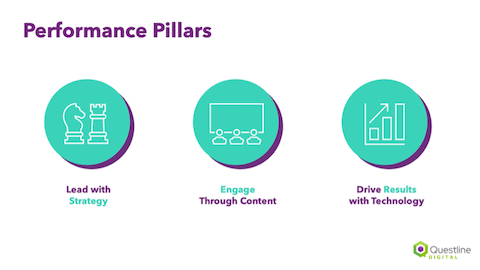
Framed around three core pillars — strategy, content and technology — Episode One brings together insights from Questline Digital’s team of experts, including Rebecca Czarobski, Joe Pifher, Adriana Scavio and Nikki Seeley. They explore what’s actually working in utility communications today.

“At Questline, we build everything around three components: Strategy, content and technology,” says Rebecca Czarobski, Senior Director of Customer Success at Questline Digital. “When those three work together, you get operational messages that prevent confusion, reduce avoidable calls and help customers feel confident about their next step.”

Example of Utility Communication Performance Pillars

Click here to watch the first episode of the Powering Engagement Podcast Series.  

Lead with Strategy

Utility customers aren’t looking for clever marketing — they’re looking for clarity. When messages are intentional, customers are more likely to understand what’s being asked of them — reducing confusion and unnecessary customer service calls.  

For utility communicators, sending more messages isn’t the solution. Instead, it’s creating a system that helps customers understand and take meaningful action.

Why strategy matters for digital utility communications:

  • Prevents customer confusion
  • Reduces call spikes
  • Ensures clear, purposeful messaging  

The episode dives into the key fundamentals that influence inbox performance, including deliverability, subject lines and sending practices.

From proper authentication (SPF, DKIM, DMARC) to clear, action-oriented subject lines, these foundational elements ensure messages reach the inbox and resonate with customers.

Deliverability Checklist:

  • SPF / DKIM/ DMARC alignment
  • Clean and simple HTML
  • Consistent “from” name
  • Fewer than five links
  • Avoid heavy banners

These are the cues that inbox providers look for when deciding whether to trust your message or simply drop it into promotions.

“If your setup is clean and your sending practices are consistent, your emails will land where customers actually see them,” Czarobski says. “That’s really the difference between hoping people saw your message and knowing that it reached them.”

Image from podcast production discussing utility communication strategy

Once an email successfully reaches the inbox, the next moment of truth is the subject line and preview text. Together, they act as the “front door” of your communications — shaping whether a customer opens, ignores or deletes the message.

Subject line best practices include:

  • Lead with a verb
  • Keep it concise (four to seven words, under 50 characters)
  • Focus on being human and factual

Keep in mind, overly promotional language, excessive punctuation or all caps can signal the wrong intent to both customers and inbox filters.

Subject line examples:

Update your billing preferences
Review your outage preparedness checklist
Confirm your energy-savings appointment

See how we’re strengthening the grid in your area

Preview text plays an equally important role, but it’s often overlooked. Rather than repeating the subject line, it should expand on it — adding helpful context in under 90 characters. This pairing helps customers to instantly understand what the message is about.

Even the best subject lines and preview text can’t compensate for poor list health or inconsistent sending practices. The episode emphasizes the importance of maintaining an engaged audience, including sending to your most active subscribers. From there, thoughtful A/B testing helps utility communicators refine what resonates most with customers, building a repeatable playbook to use in the future.

When subject lines, preview text and sending practices work together, utilities move from simply reaching customers to truly connecting with them.

Engage Through Content  

Once the foundation is set, the focus shifts to content – this is where utilities either connect or miss the mark.

Joe Pifher, Creative Director at Questline Digital, emphasizes that effective utility content doesn’t need to be flashy — it needs to be easy to understand and act on.  

Image from podcast production discussing content engagement

Whether billing updates, rate changes or program promotions, utility programs can often feel complex and confusing to customers. The role of content is to make these messages easier to navigate, not more challenging.

“These are topics that can sometimes be stressful and create some confusion,” Pifher says. “We build content to be clear, relevant and easy to scan. The goal is to help the customer get what they need without working for it.”

Pifher focuses on the importance of simple language, clean structure and a tone that feels helpful rather than promotional. Communication should feel like “a respectful colleague, not a megaphone,” he adds.

Every message should quickly answer three questions:

What is this?
Why should I care?
What do you want me to do?

There’s also a technical side to message structure that often goes overlooked. Utility communicators should focus on clean layouts, minimal graphics, clear hierarchy and a primary call-to-action to guide customers.    

Just as important, the message should match the design, Pifher explains. For example, an outage alert shouldn’t look or read like a rebate promotion.

As utility audiences become more diverse, accessibility and translation are also essential for emails.

With tools like Questline Digital’s Engage Global Translate, utilities can deliver the same communication across many languages — without adding extra workload for internal teams.

Accessible digital utility communications involve these principles: 

  • Plain, easy-to-understand language
  • Consistent terminology
  • Strong, logical structure
  • Real text (not embedded in images) for headlines and key information

When these elements are in place, messages become easier to translate — and more accessible for screen readers and other assistive technologies.

Drive Results with Technology  

In the last segment, Questline Digital’s Product Manager Adriana Scavio and Support Specialist Nikki Seeley turn the conversation toward technology — and how the right tools can help utilities scale their communications without overwhelming time-strapped teams.

As they note, it’s not that utilities don’t want to communicate more — it’s that many aren’t sure where to start or how to keep it going. That’s where technology plays a critical role.

Newsletters are considered one of the most high-value, proactive communications to build long-term customer engagement.

“Every utility needs a way to communicate with their customers, about programs, rates, new technology, Time-of-Use changes and more,” Scavio says. “And newsletters accomplish this in a way that feels friendly and helpful instead of overwhelming for customers.”

Over time, newsletters create a steady connection that makes customers more likely to engage, enroll and respond when it matters most. Even if customers don’t read every message, regular communication builds familiarity and trust over time.

“The value really adds up month after month, because when customers hear from you regularly, they’re more likely to take action when it matters, enroll in your programs, understand their bills and really trust your recommendations,” Seeley explains.

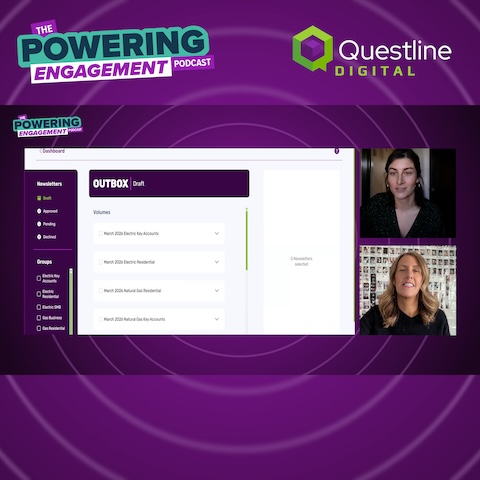
Questline Digital’s self-service Newsletter Outbox gives utility communicators the ability to build, edit and schedule newsletters in one place.

The Newsletter Outbox provides:

  • Clarity: Organized workflows that show exactly where campaigns stand
  • Flexibility: Easy editing, scheduling and customization without starting from scratch
  • Efficiency: The ability to reuse, adapt and scale content quickly

The goal isn’t to reinvent the wheel with every campaign,” Scavio says. “It’s to build systems that make communication easier, faster and more repeatable.”

When the right tools are in place, the result is a more proactive approach to utility communications

Build a System, Not Just Messages

By aligning strategy, content and technology, utilities can move beyond simply sending messages to creating real customer understanding. It’s a shift from reactive communication to a more intentional approach — one where every message has a purpose.

In upcoming episodes, the Powering Engagement Podcast Series will explore how utilities can use segmentation, personalization and other strategies to create smarter, more data-driven communications.

Watch the first episode, Foundations for Success, available now on demand.

To attend our upcoming podcast episodes, sign up here.