
Utility communicators face a common challenge: How do you increase customer engagement without sending more emails, adding complexity or overwhelming busy teams?
That’s the focus of Episode Two of Questline Digital’s Powering Engagement Podcast Series, Smarter Targeting & Optimization. Building on the fundamentals discussed in the first episode, the conversation explores how utilities can move beyond simply sending campaigns to create more intentional, data-driven communications.
Our team of experts explores how utilities can create more effective email campaigns that truly resonate with customers.
Smarter Targeting Starts with Segmentation
When thinking about sending a message to customers, utility communicators should first ask, “Who actually needs this email?”
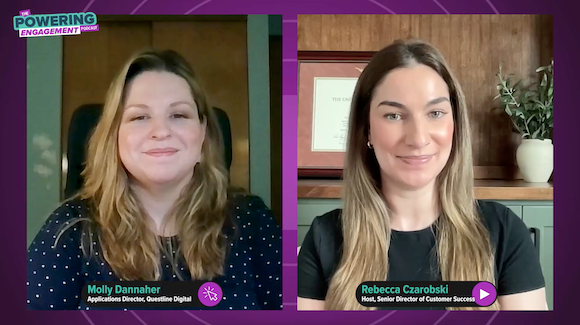
According to Molly Dannaher, Questline Digital’s Applications Director, one of the most common communication challenges that utilities face is ensuring the right message reaches the right customer at the right time.
This is where segmentation becomes essential.
For some utilities, segmentation may be as simple as targeting newly enrolled customers with onboarding information. For others, it may involve more sophisticated audience criteria, such as identifying customers who recently opened an email, have overdue balances and live in zip codes that qualify for payment assistance programs.
While segmentation is often perceived as complex, Dannaher explains that the concept is actually quite simple: Deliver more relevant communications to the customers who need them most.
Without segmentation, utilities often send the same message to every customer, regardless of whether the information actually applies to them. Over time, this one-size-fits-all approach can lead to lower engagement and missed opportunities to connect with customers.
“Customers can experience message fatigue when messages don’t align with who they are and what’s important to them,” Dannaher explains.
Segmentation is becoming increasingly important as customers have come to expect personalized experiences in nearly every aspect of their lives. When communications don’t feel relevant, customers are more likely to ignore them — or stop engaging altogether.
Fortunately, utilities don’t need complex strategies to get started.
Dannaher encourages utility communicators to look beyond basic demographic data and pay closer attention to customer behavior. Who is opening emails? Which topics generate engagement? Which customers consistently ignore messages?
Dannaher also recommends following up with customers who didn’t open an important email. In many cases, knowing who doesn’t engage can be just as valuable as knowing who does.
These insights can help utilities create more targeted communication strategies while supporting broader utility goals.
“When we segment, we see more engagement, less confusion, fewer questions and utility call centers often experience a reduction in customer calls,” Dannaher says. “Less customer confusion leads to better adoption of your programs and overall better customer engagement scores.”
Personalization Ensures Relevance
Once utilities identify the right audience, the next step is crafting a message that feels relevant to the person receiving it.
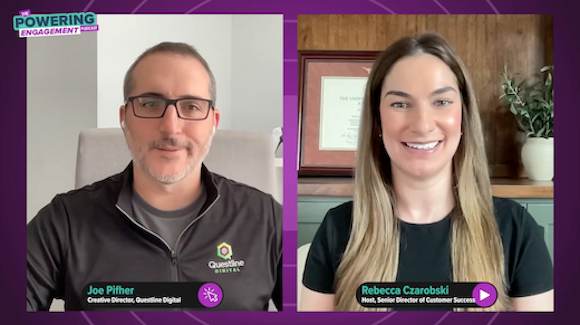
According to Joe Pifher, Questline Digital’s Creative Director, personalization is often misunderstood. Many marketers associate personalization with inserting a customer’s first name into an email. While that tactic has its place, Pifher notes that meaningful personalization goes much deeper.
“Personalization is removing all that noise,” he says. “You want to make sure that your customers only see what’s relevant to them.”
For utilities, personalization and segmentation work hand in hand. A customer already enrolled in a program doesn’t need the same message as someone considering enrollment for the first time. Likewise, customers who don’t qualify for a program shouldn’t receive an email about it.
Rather than creating dozens of different emails, Pifher encourages communicators to focus on tailoring the message to an audience’s specific needs and circumstances. “When you’re doing that well, the message is going to resonate with your customers,” he says.Unlike traditional marketing campaigns, utility communications often involve topics customers genuinely care about, including service reliability, financial assistance and energy savings. And these topics require a different approach to communications.
Instead of relying on marketing jargon or overly clever language, utility communicators should focus on providing straightforward information that helps customers make informed decisions.
“When you write from a place of being calm, clear and helpful, your customers are going to relax and you’re going to build trust,” Pifher says.
Clarity Beats Cleverness
The same principle also applies to email structure. Most customers aren’t reading every word of a message – they’re quickly scanning for the information that matters most to them.
According to Pifher, customers are typically looking for answers to three questions:
- What is this?
- Does it apply to me?
- What do I need to do?
The faster an email answers those questions, the more effective it becomes. As AI-powered inboxes continue to evolve, clarity will become even more important for utility emails.
“Clarity beats cleverness,” Pifher says. “As a creative, I hate that because I would love to be clever in all my emails. But we’re finding that just being clear is more effective.”
When discussing best practices, Pifher offers one piece of advice utility communicators can apply immediately.
“My number one rule is one audience and one goal per email,” he says. “If everything’s important, nothing’s important.”
Utilities often attempt to include multiple announcements, programs and calls to action within a single communication. The result is a message that tries to accomplish too much – but ultimately accomplishes less.
Instead, Pifher recommends focusing on a single audience, objective and primary call to action. This approach creates clearer performance metrics and stronger engagement over time.
Drive Stronger Results With A/B Testing
Once utilities have defined their audience and crafted a relevant message, the last step is optimization.
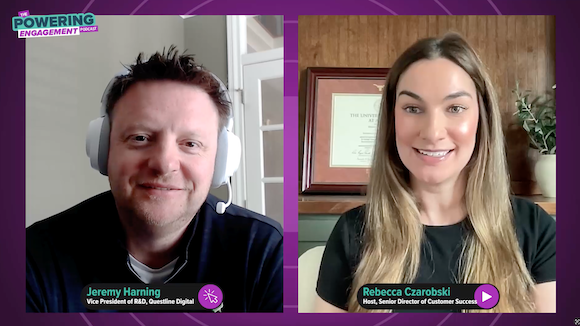
Many utility communicators hear the term “A/B testing” and immediately think of additional work, complicated reporting or difficult-to-interpret results. However, Jeremy Harning, Questline Digital’s Vice President of Research & Development, encourages utility teams to think about testing differently.
At its core, A/B testing answers a simple question: What actually resonates with your audience?
“The way that I think about testing is that you’re always trying to move the needle toward perfection,” Harning says. “We know we can’t always get there, but we can make small improvements over time that help us get closer to the best results possible.”
Rather than randomly changing elements from one campaign to the next, A/B testing allows utilities to make data-driven decisions based on customer behavior. Every email becomes an opportunity to learn something new and apply those insights to future communications.
When open rates are lower than expected, Harning recommends starting with the two factors that influence opens the most: sender name and subject line.
If customers are opening emails but not taking action, the focus then shifts to different elements within the message.
“If we’re getting good attention on our emails, but we’re not getting the action we want, that’s where we start looking at the CTA language, placement and the number of calls to action,” Harning explains.
Timing is another area where utilities frequently look for answers.
“There is no magic send time,” Harning says. “But there are things we can do to move the needle.”
According to Harning, utilities should avoid sending emails at the top of the hour, when countless marketing platforms are deploying messages simultaneously. Instead, consider scheduling communications at less conventional times to help your email stand out in a crowded inbox.
Most importantly, he encourages utilities to view testing as an ongoing process rather than a one-time exercise.
“It’s about consistency, documenting what happened and reusing what you’ve learned,” Harning says. “Every time we communicate, we should learn something from it and use that information to do better next time.”
Over time, those small insights become a valuable playbook that helps utilities continuously improve engagement, drive stronger results and create more effective communications.
Turn Insights into Action
One of the most valuable takeaways from Episode Two is that utilities don’t need to overhaul their communication programs to improve engagement.
Small adjustment, like segmenting audiences, leveraging behavioral data and simplifying messaging, can make a big difference.
Want to learn more about audience segmentation, personalization and optimization?
Watch Episode Two of the Powering Engagement Podcast Series to hear the full conversation and discover practical strategies your team can implement right away.
Watch On Demand