For water utilities, ensuring a constant supply of clean and safe water is paramount. However, maintenance, repairs and unforeseen circumstances can lead to temporary water interruptions.

These planned interruptions, while necessary, can often cause significant inconvenience to customers. Therefore, it’s crucial that water utilities implement an effective water utility communication plan to notify customers and manage expectations.

“With planned water interruptions, we have a more precise idea of the scope of the work, and therefore, can more accurately predict how long it will take and how long the customer will be without water,” says John Cox, General Superintendent of the Water Distribution Division, Los Angeles Department of Water and Power (LADWP). “We have the benefit of time and can do a more thorough job of providing notifications.”

Creating a Water Utility Communication Plan

A successful communications plan for planned water interruptions is essential. It not only prepares customers for what they can expect, but also positions your water utility as a transparent and trusted resource. Clear communication is key.

  • Identify affected customers: Notify all customers affected by the water interruption. In addition to residential customers, consider local businesses, schools and hospitals that might need special preparations.  
  • Define key messages: Keep messages clear, concise and empathetic. Explain the reason for the interruption, the anticipated duration and any steps customers should take. Water interruption communications should answer as many customer questions as possible.
  • Choose communication channels: Ensure your water utility reaches as many customers as possible with a multichannel water utility communications plan. This might include emails, bill inserts, social media, website content, educational webinars, community events, call center scripts and more.
  • Coordinate with respective support groups: Collaborate with the necessary groups, whether community partners, local media, government departments or other agencies to get the message out to local businesses and residents.  
  • Have a contingency plan: If the water interruption goes longer than expected, make sure you have a plan B to mitigate negative customer experiences.

Notifying Customers About Water Interruptions

The foundation of any successful water utility communication plan is proactive outreach. When water utilities foresee an interruption, they should immediately inform affected customers. This advance warning allows customers to make necessary preparations, such as storing water or making changes to their schedule or business operations. 

In addition to proactive communications, transparency is key. With a planned water interruption, utilities should provide affected customers with as much information as possible. Remember, the difference between a minor inconvenience and a major grievance often lies in the effectiveness of your communications strategy in setting customer expectations.

Essential information in a water utility communication plan includes:

  • The reason for the interruption: Whether it’s maintenance, upgrades or emergency repairs, explaining the reason for the planned water disruption helps build customer trust, confidence and understanding.
  • Start and end time: Clearly state when the water service will be interrupted and when it is expected to resume.
  • Affected areas: Detail which neighborhoods or areas will be affected to avoid unnecessary concern among unaffected customers.
  • Preparation tips: Offer advice on how customers can prepare, such as storing water, not turning on the faucet, and more.
  • Alerts and contact information: Provide information on where to get updates and who to contact with questions. This might include a link to sign up for utility alerts.

Channels to Communicate with Water Utility Customers

Utilizing multiple communication channels ensures that your message reaches as broad an audience as possible. Here are several effective channels for a water utility communication plan:

  • Door hangers and letters: Traditional media like door hangers, letters and bill inserts are an effective way to reach customers. 
  • Social media: Platforms like Facebook, X (Twitter) and Instagram are invaluable for reaching a wide audience. Updates on social media can keep the public updated in real time.
  • SMS alerts: Text messages are an excellent way to directly notify customers, especially for time-sensitive information.
  • Email notifications: For detailed updates, including maps and other visual elements, email marketing is an effective tool.
  • Website updates: Maintain a dedicated section on your website for planned water interruptions where customers can find detailed information and updates.
  • Local media: For extensive water interruptions, partnering with local newspapers, radio stations and TV channels can enhance outreach.

According to Cox, LADWP gives customers at least 72 hours advanced notice before any planned water outages. The project team, which can include contractors and LADWP crews, distributes notices to customers as part of the water utility communication plan.

Door hangers containing notification letters with pertinent information is the most effective method for communicating with their customers. LADWP shares the date and time of the interruption, the reason for the interruption as well as contact information in case they’d like to reach out for more details. Since water interruptions are an inconvenience, it’s also imperative to thank customers for their patience.

“We tend to deliver those letters door-to-door, and often we encounter the customer in person during this process,” Cox says. “Therefore, we have the benefit of explaining the upcoming work that we plan to do and the impact to the area. Door-to-door notification is the most effective method for us because it ensures that each affected resident will receive written notification at their home.”

For larger planned water interruptions, LADWP’s Community Affairs team will post information on the social media platform Nextdoor, which allows users to geotarget to a specific group. This ensures that the message is sent to affected customers.
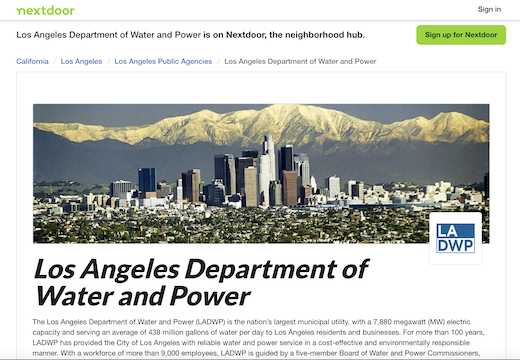
Example of a social media page communicating a planned water utility interruption

“If a significantly large area will be experiencing a planned water interruption, we may also contact the local Neighborhood Council,” Cox says. “They can help notify customers through their channels and contacts. Using both letters and Nextdoor tends to be sufficient to blanket an affected area under normal circumstances.”

Trussville Gas & Water, which services customers in Alabama, is dedicated to proactive communications about planned water interruptions. The utility underwent a major 10-month infrastructure project to replace 2.5 miles of water pipeline, which caused temporary water interruptions for approximately 900 residents.

Their water utility communication plan featured multiple communication channels, including digital and traditional platforms. To notify affected customers, Trussville Gas & Water placed large signs in front of affected subdivisions in the community.
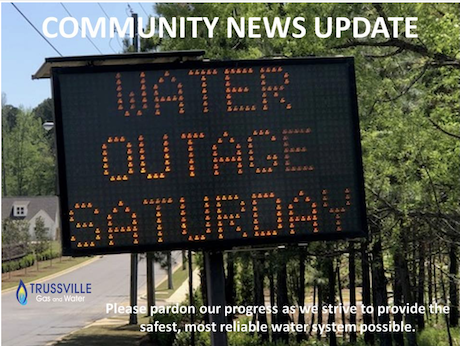
Example of a web ad from a water utility communicating a planned water interruption

Additionally, the utility updated customers on their website and Facebook page. To reach a wider audience, they also reached out to the local newspaper, the Trussville Tribune, to publish project updates.

Communicating Water Interruptions to Business Customers

When it comes to communicating planned water interruptions to business customers, utilities must take a different approach. Collaboration with local businesses and community partners is vital.

For multifamily buildings and apartments, Seattle Public Utilities works with landlords and management companies to ensure residents are aware of the water interruption and know what steps they need to take.
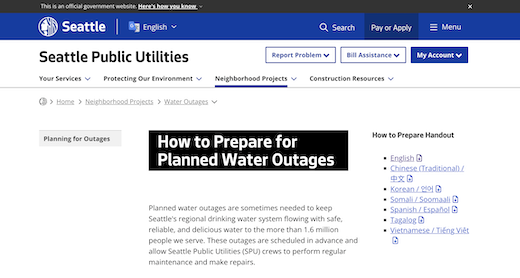
Example of a water utility website communicating a planned water interruption to customers

Additionally, the utility works with local businesses to determine the best time to shut off water to mitigate the negative impact on operations. As a result, water interruptions may take place overnight or after business hours.

LADWP’s Customer Service Key Accounts team and Corporate Communications and Strategy Division’s Community Affairs are vitally important to the utility’s communication plan. Both teams help to minimize the impact of planned water interruptions at hospitals and schools.

“The impact to a school or hospital is much greater than a single residence,” Cox says. “That’s why it’s ideal to have as much advanced planning time as possible to make sure that the business customers in question — especially sensitive institutions like hospitals and schools — are fully informed and prepared for a water interruption.”

Additionally, LADWP’s Legislative and Intergovernmental Affairs group is responsible for communicating any significant projects to the local council district and/or mayor’s office. Those governmental entities can often help spread the word and alert business customers when a significant interruption is planned. 

Why a Water Utility Communication Plan is Important

A robust communication plan does more than inform — it builds and maintains trust with customers. Here are a few reasons why water utilities should develop a communication strategy for planned water interruptions: 

  • Minimizes disruption: By allowing customers to prepare, you can lessen the impact of the water interruption on their daily lives.
  • Maintains customer trust: Transparent and timely communication demonstrates that you value your customers and their experience.
  • Enhances reputation: Utilities that communicate effectively are often perceived as more reliable, trustworthy and customer-centric.  

While planned water interruptions can be an inconvenience for customers, they also provide utilities with an opportunity to improve trust and long-term customer satisfaction. By developing a comprehensive water utility communication plan and utilizing the right channels to share essential information, utilities can minimize inconvenience and build stronger customer relationships over time.
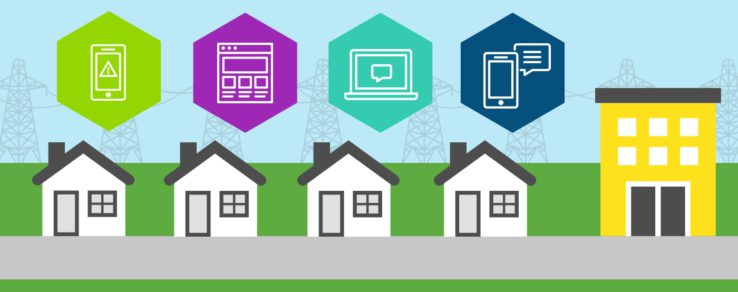
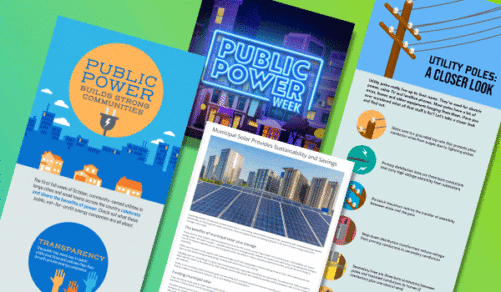
Learn how a turnkey engagement solution from Questline Digital can help your water utility communicate planned interruptions to customers.

Engaging with municipal utility customers requires a multifaceted strategic plan and a deep understanding of community needs. Municipal utilities play a critical role in providing essential services such as water, electricity, natural gas and sanitation to residential and business customers.

Establishing effective communication channels and engagement strategies is imperative for municipal utilities to address customer needs, promote conservation efforts and foster a sense of trust within the community.

Today’s rapidly changing landscape, marked by constant technology advancements and shifting consumer expectations, means that municipal utilities face unique challenges and opportunities when building relationships with their customers. The dynamics of engagement have evolved significantly, with social media and mobile apps becoming prominent channels for interaction.

Still, amidst these technological changes, traditional engagement methods remain invaluable to connect with customers. Balancing these approaches and incorporating best practices of municipal utilities ensures that your utility can effectively communicate, gather feedback and address the diverse needs of its customers.

From promoting energy efficiency and the benefits of conserving water to addressing billing inquiries, the way utilities interact with customers can significantly impact customer satisfaction levels and overall community well-being. By implementing municipal utility best practices for engaging with customers, utilities can build trust and stronger customer relationships.

Empower Customers Through Education and Outreach

One of the easiest ways to begin engaging with municipal customers is to start with education. Customers know what they know, and don’t know what they don’t. And when it comes to utilities, the topics of conversation aren’t always easy to understand. Customers may wonder:

  • What is decarbonization?
  • What does time-of-use billing mean and how does it affect me?
  • Does turning off the lights or turning off the faucet really save me money?

Customers have a multitude of questions, and your municipal utility is the best, most trusted source to provide answers. You can educate customers on various platforms, including:

  • Email newsletters: Consistent monthly touchpoints are one of the best ways to build engagement with customers throughout their energy journey. When you’re providing customers with helpful and engaging information, they start to look forward to these ongoing messages.
  • Social media posts: It’s important to understand which social media platforms your customers use the most. Many times for utilities, especially municipal utilities, we find that Facebook is the platform with the highest customer engagement. Vary your types of posts from static images to videos to infographics and more, so that customers stay interested and entertained.
  • Community events: One of the best aspects of a municipal utility is its ties to the community. Use this involvement to your utility’s advantage and plan fun, yet educational, events where the community can come to enjoy themselves and get some of their most common questions answered.

For example, Kerrville Public Utility Board (KPUB) uses Public Power Week to share information and engage with the community every year. Through their public power customer service, the utility hosts bucket truck rides for families, meet-and-greets with line workers, presentations on KPUB programs that can help customers save energy and money and tours of their community solar fields. By providing activities for customers to have fun and learn about their utility’s efforts, KPUB is reinforcing that it exists to serve its community members.

Education and outreach initiatives are powerful tools for empowering municipal utility customers and promoting beneficial programs and services. In addition to in-person events, municipal utilities can organize online workshops, webinars and informational sessions to educate customers on topics like energy conservation, water-saving techniques and other best practices of municipal utilities.

Additionally, providing online resources, such as energy calculators and eye-catching infographics about conservation, can empower customers to make informed decisions about their usage. These calculators and other interactive content pieces are great items to include in monthly newsletters. By investing in customer education, municipal utilities can continue to cultivate a culture of continuing education within the community.

Examples of communications best practices for municipal utilities

How to Enhance Public Power Customer Service

In addition to promoting continuing education, municipal utilities should put a large focus of their public power customer service, especially transparent communication and accessible information.

Transparent communication channels and accessible information are essential for building trust and fostering positive relationships with customers. For example, your municipal utility should put an emphasis on ensuring the billing statements customers receive are clear and concise, with detailed explanations and graphics of charges and usage patterns. This will help customers to better understand their consumption habits and the associated costs.

For example, when PSEG Long Island introduced a balanced billing program, Questline Digital helped them create an educational video to educate customers about the changes to their monthly bills. The utility’s tutorial video helped customers understand how the set monthly payment was calculated.

Additionally, utilities should leverage the many available digital platforms to connect with customers. Specifically, offering mobile apps and online portals is essential. Customers can have real-time access to their My Account information, outage updates and other resources.

In fact, if you’re not already following this best practice for municipal utilities, your satisfaction scores might be taking a hit. According to the J.D. Power 2024 U.S. Utility Digital Experience Study, although utility mobile apps consistently have the highest level of customer satisfaction (60 points higher than mobile websites and 38 points higher than websites), 27% of utilities evaluated in the study do not currently offer one.

“Digital is the first stop for utility customers when they experience a problem or need more information related to billing or special programs, but more often than not, their digital inquiries are leading to dead ends and phone calls to customer service,” said Jon Sundberg, Director of Digital Solutions at J.D. Power, in a recent press release. “At a time when many industries are focused on developing consumer websites and apps that are updated in near real-time, the static, reactive approach to digital being taken by utilities is falling far short of current customer expectations.”

Enhancing your municipal utility’s digital footprint and focusing on accessibility and transparency will demonstrate your utility’s commitment to customer-centric services and solutions.

Receive and Implement Customer Feedback

A final best practice for municipal utilities when trying to engage with customers is simple: Ask them what they need. If you haven’t already noticed, customers are typically quite vocal when it comes to their utility services and they’re not afraid to share their opinions. While sometimes these can be negative, it’s up to your municipal utility to use them as a way to help your utility grow.

In fact, customer feedback is critical for improving utility services and addressing customer concerns in a timely manner. By establishing various feedback channels that customers can use to offer suggestions or opinions, your municipal utility is reinforcing its public power customer service role in working for the betterment of the community.

These feedback channels can include customer surveys, feedback forms after service, a dedicated customer service email, a submission field through My Account portals and more. The opportunities to receive feedback are endless. Just remember to promote these feedback channels and encourage customers to share their opinions.

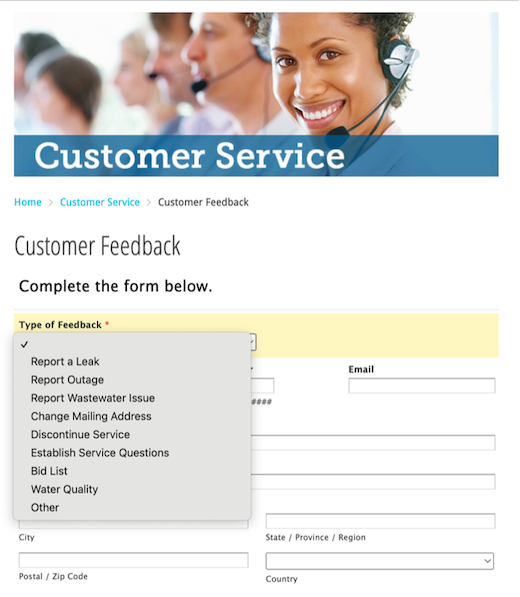
Madison Utilities, based in Madison, Alabama, has a designated customer service feedback form hosted on their website. They provide options for the type of feedback, ranging from reporting a wastewater issue or water quality issue to providing a field where customers can specify their feedback.

Example of online tool used to improve public power customer service
Image source: Madison Utilities

After receiving input from these various channels, it’s important that your municipal utility takes them to heart and works effectively to implement change based on customers’ experiences and satisfaction levels.

Additionally, consider engaging with customers on your municipal utility’s social media platforms and community forums to address inquiries, provide updates and gather further insights into customer needs and preferences. Be where your customers are. This way, you can monitor customers’ wants and needs, then meet and exceed them. By prioritizing customer feedback, municipal utilities can build stronger relationships with customers and drive continuous improvement.

Proven Solutions to Boost Public Power Customer Service

Implementing best practices for municipal utility customer engagement is essential for fostering trust within the community and promoting relevant programs and services. By empowering customers through education and outreach, enhancing accessibility and transparency and implementing feedback opportunities, municipal utilities can build stronger customer relationships.

As municipal utilities navigate the challenges and opportunities of building customer engagement, embracing customer-centric strategies will be key to achieving long-term success.

Find out how an engagement solution from Questline Digital can strengthen relationships with your municipal utility.

Smart devices have changed the way we interact with technology, and smart meters are no exception. Gone are the days when analog meters would only show how much energy was used, and monthly bills could offer little to help homeowners and businesses truly understand their power consumption. Now, smart meter data puts the power into customers’ hands by providing detailed, actionable information on their energy usage.

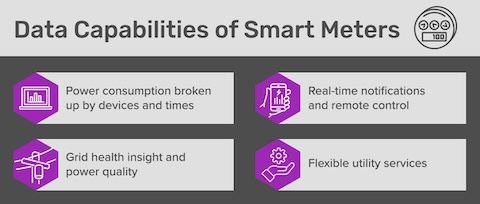
Chart listing the data capabilities of utility smart meters

Data capabilities of smart meters

  • Power consumption subdivided by devices and times
  • Grid health insight and power quality
  • Real-time notifications and remote control
  • Flexible utility services

Smart meters can monitor how much power customers are currently using, how many kilowatt-hours they’ve used, and even which devices are using that electricity. Basic data is shared with customers, allowing them to analyze their energy habits. Additionally, smart meter data is shared with utilities to provide insightful feedback and tailored energy savings suggestions.

But did you know that this powerful two-way connection can benefit both utilities and their customers in other ways? Real-time, accurate data can be used for much more than just monthly energy check-ins at the end of each billing cycle.

Unlocking the Potential of Smart Meter Data

As more utilities and their customers switch to advanced metering infrastructure (AMI), more data about individual energy use and the overall grid will be available. As a result, the capabilities of managing consumption will only expand.

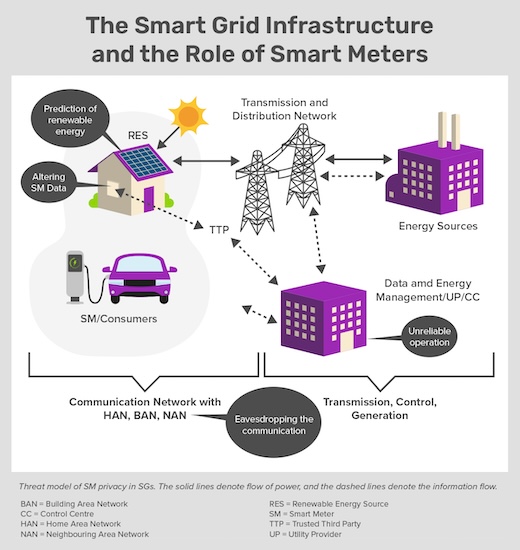
Chart illustrating how the smart grid shares data between the utility and customers

This data also offers utilities a nonintrusive way to learn more about their customers and better tailor services to each individual. Read on to learn how to use smart meter data — including energy consumption patterns, peak demand times, load profiles and more — to strengthen your utility’s relationships with homeowners and businesses.

3 ways to enhance customer communications with smart meter data

1. Energy education and programs

Customer usage data, especially concerning specific appliances, can inform utilities on areas where more education could be useful. While many large-scale studies on energy use may take months or even years to produce usable data that can influence programs, real-time smart meter data is transmitted in minutes.

Accurate bills and reliable forecasts can help customers on a monetary level. These numbers can be used by the utility to make tailored recommendations for energy savings. But, that’s not all. For example, if a customer uses appliances inefficiently, such as leaving large electronics on all night, smart meter data can offer insight on what programs or rate plans could benefit them.

2. Customer segmentation

The more your utility learns about customers and how they use energy, the better it can segment them based on needs, preferences and behaviors. Utilities can use these learnings to tailor offers and services accordingly.

For example, customers with old, inefficient appliances could benefit from information about potential rebates available on new appliances purchased. A customer who uses most of their energy during off-peak hours could benefit from information about time-of-use rate plans.

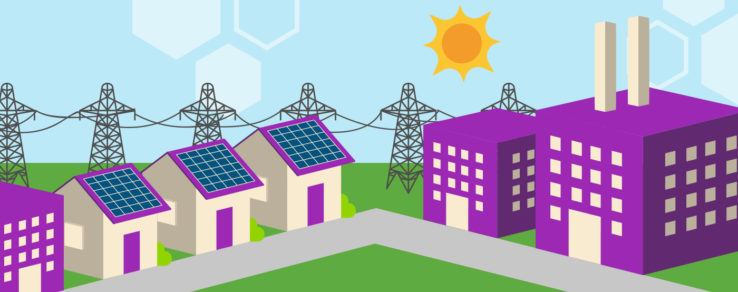
Illustration demonstrating how utilities use smart meter data to improve customer communications about appliance use

Depending on how customers respond to initial interest emails, your utility may be able to send even more tailored communications in the future.

3. Grid resilience + reliability

Did you know that the American electric grid is more than 100 years old? Though it’s seen quite a few infrastructure updates since then, very few have had as much impact as smart technology.  

Smart meters are just a part of a larger, connected system that makes up the smart grid, which uses renewable energy systems and other advanced equipment to increase the strength and reliability of electricity.

Data received from smart meters provide insight into the current load placed on the grid, especially if the capacity is nearing its limit. High-demand periods can typically be predicted before they occur, and potential outages can be detected and even prevented thanks to the data gathered by this smart system.

By understanding your customers’ needs, your utility can provide tips and information to help them better manage their energy use, strengthening your relationship with customers.  

Challenges of Using Smart Meter Data

Though the number of smart meter installations is steadily climbing each year, that doesn’t mean that all customers immediately accept the new technology. Security concerns have been the source of fear for quite a few years, especially when it comes to fears that utilities will use that information in unwanted ways. Providing answers to customer questions is crucial to maintaining a trusting relationship.

Common concerns among customers include the accuracy and privacy of their smart meter data.

1. Accuracy

After decades of trust in analog meters, some customers have questions concerning the accuracy of smart meters when it comes to measuring energy use.

Customers can rest easy knowing all meter manufacturers are required to test for accuracy and provide those results, proving that they follow the performance standards set by the American National Standards Institute. Before a meter ever reaches a customer’s property, it has been tested multiple times to ensure it will provide on-the-mark measurements.

Plus, real-time data transmission between the meter and utility keeps everyone in the loop and can immediately cause an alert if any part of the system is malfunctioning.

2. Privacy

Data security may be the most common concern with most new technology, and smart meters are no exception.

Advanced security and encryption technology are used by utilities to protect customer data, and smart meters fall under that same level of protection. Unless a customer has other smart devices or an energy management system that can break down usage by appliance, utilities will only receive data concerning how much energy is used and at what time.

Customers can customize their smart meter experience based on their personal preferences and choose to keep detailed information private. Communication is key to ensure customers that their data will be safe with smart meters.

Illustration showing how the smart grid utilizes data from different customers

Use Smart Meter Data to Strengthen Customer Relationships

Data collection has become standard across many industries, and not all of it is used for good. Maintaining a strong, trusting relationship requires handling all data safely and securely, and walking a fine line between providing valuable suggestions and overstepping boundaries.

Learning more about your customers through smart meter data is an effective way to determine what services they could use most and to build programs that serve these needs.

Use data to build stronger customer relationships with an engagement solution from Questline Digital.

Behind the simple act of turning on a tap lies a complex system of infrastructure and services provided by water utilities — systems that customers may not always understand. From concerns about water quality to inquiries about service interruptions, customers seek clarity and reliability from their utility providers.

To ensure clear communications and effectively build long-lasting customer relationships, understanding their concerns and answering their questions is key. However, engaging with customers is no longer just about responding to their inquiries. Instead, it’s a matter of being proactive — anticipating water utility customer needs and providing timely, relevant information.

Transparency is paramount, with customers expecting clear communication about water quality reports, maintenance schedules, disruptions to service and more. By leveraging innovative communication channels, water utilities can forge stronger connections with customers and enhance their overall experience.

“With monthly rates continuing to rise and the water supply running dangerously low in many parts of the country, there has never been a more critical time for water utilities to proactively communicate with their customers about what they are doing to protect our drinking water today and into the future,” Andrew Heath, Senior Director of Utilities Intelligence at J.D. Power, explained in a press release.

The J.D. Power 2023 U.S. Water Utility Residential Customer Satisfaction Study found a direct correlation between communications and customer satisfaction. The study showed that a 7-point increase in customer communications and a 6-point increase in customer service drove increased levels of customer satisfaction across the board.

“The communications factor continues to show improvement across each wave of the study, suggesting that utilities are proactively reaching out to customers throughout the year to provide updates on pricing, safety and supply issues,” according to the report.

Get to Know Your Water Utility’s Customer Needs

Every interaction with a customer is an opportunity to learn and improve. Water utilities must recognize the diversity of concerns that customers may have. From questions about water quality and conservation tips to inquiries about billing discrepancies or service interruptions, being attentive to these concerns is crucial.

To begin addressing these concerns, your utility should first focus on identifying common customer inquiries, including knowing customers’ usual consumption patterns, common complaints, preferences, and their general attitude toward water conservation. By understanding your customers better, you can start to anticipate their needs and proactively address their questions.

After all, your utility may provide a needed service, but the way you approach communicating to water customers speaks dividends. Salesforce research shows that 88% of customers say the experience a company provides is as important as its product or services. 

Effective Strategies for Customer Communications

Effective communication is crucial in addressing your water utility customers’ needs. This starts with establishing clear communication channels where customers can reach out with questions or concerns. This doesn’t just mean responding to their queries in a timely manner, but also being able to clarify complex water-related topics. For example, if there’s a change in water rates or a new policy on water usage, it’s your utility’s responsibility to communicate these changes to your customers.

Traditional communication methods like call centers are extremely valuable. Training customer service representatives to handle inquiries efficiently and providing educational resources can empower them to address common questions. However, it’s also essential to create digital experiences for water customers through email, newsletters, mobile apps, social media and your utility website.

According to the J.D. Power 2024 U.S. Utility Digital Experience Study, customer satisfaction with utility websites and apps lag behind other industries, achieving only a 594 rating on a 1,000-point scale. This is compared to other industry scores, including:

  • 718 for wealth management
  • 702 for property and casualty insurance
  • 685 for retirement plans

“Digital is the first stop for utility customers when they experience a problem or need more information related to billing or special programs, but more often than not, their digital inquiries are leading to dead ends and phone calls to customer service,” Jon Sundberg, Director of Digital Solutions at J.D. Power, explained in a press release. “The static, reactive approach to digital being taken by utilities is falling far short of current customer expectations.”

Given the preference for digital communication among customers, it may be time to put effort and resources into developing or updating your utility’s mobile app or ensuring your utility’s website offers a seamless user experience.

Additionally, personalization goes hand-in-hand with digital experiences and communications. Research shows that 59% of customers already believe businesses should personalize their experiences based on the data they collect about them. Further, the J.D. Power Utility Digital Experience study showed that only 54% of utility customers say they have received personalized information regarding their energy or water consumption, despite 49% of customers indicating that they would find this helpful.

Knowing these preferences, utility personalized video offers an easy and appealing way for water providers to engage with customers. Personalized videos leverage customer data, such as usage, program participation and content interests, to create unique, relevant videos for each individual. It’s no surprise that data shows that using personalized calls-to-actions (CTAs) result in 202% more conversions than those without.

4 Key Factors to Meeting Water Utility Customer Needs

In addition to developing strong digital communications, there are other key factors to remember when addressing your water utility’s customer needs.

1. Enact Transparency

Customers appreciate when they are kept in the loop about issues that impact their water service. Whether it’s an unexpected disruption in water supply, a planned maintenance activity or a change in billing procedures, ensure that you communicate these developments to your customers as early as possible.

Notifying customers in advance demonstrates respect for their time and helps manage expectations. Similarly, continue to update customers throughout the process to keep them in the loop. Transparent communications build trust, and trust leads to customer loyalty.

Additionally, implement systems to notify customers in advance of planned maintenance, service interruptions or emergencies. These notifications can be sent through automated phone calls, text messages and/or email alerts, and will continue to act as transparent forms of communication.

2. Implement Feedback Loops

Providing avenues for customers to voice their concerns is one of the most impactful things your utility can do to make sure customers feel heard and valued. Consider conducting surveys, providing feedback forms or holding interviews to gather insights about your customers and their experiences. These methods can provide valuable insights into water utility customer needs and help tailor future communication strategies.

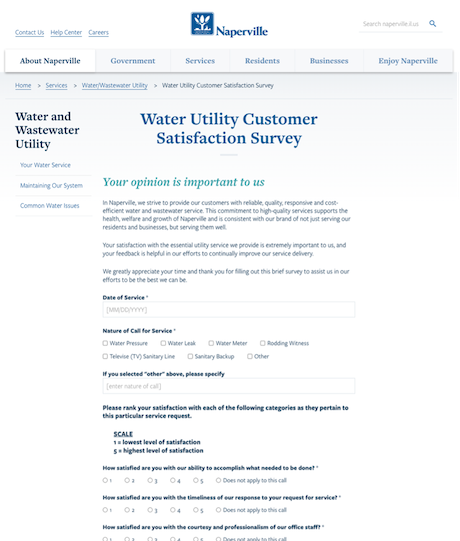
For example, the City of Naperville, Illinois, hosts a water utility customer satisfaction survey on their site that customers can fill out. The survey covers the date of service, what service occurred and satisfaction questions about the experience. Customers can provide their name, address and phone number to be further connected to the utility if there are additional concerns that could not be explained in the survey. The utility uses this customer feedback to guide its service delivery.

Example of customer satisfaction survey for water utility to assess customer needs
Image Source: City of Naperville

3. Educate and Engage the Community

Provide educational materials and resources to help customers understand their water service, conservation practices, billing processes, and any other relevant information. Don’t discount both physical and digital methods of outreach: Send direct mail postcards, host community events, post on social media and keep your website updated.
Additionally, engage with the community through public meetings, events or outreach programs to address concerns, gather feedback and build customer relationships. Keep customers informed about any changes or developments related to their water service.

For example, North Texas Municipal Water District hosts quarterly tours of its water treatment plants. In the first quarter of 2023, the tour was dedicated to elected officials and staff of their member cities and customers. They received an overview of the district, as well as information on history, service areas, water conservation, outreach initiatives and ongoing major projects, then toured the plant complex to see operations in action.

4. Consider Your Diverse Customer Base

Recognize and accommodate your utility’s diverse customers, understanding that inclusivity is paramount in effective communication. This may mean offering customer support in multiple languages, ensuring that language barriers do not hinder access to essential services.

Accessibility considerations extend beyond language. Utilities should make their communication channels and materials accessible to customers with disabilities, providing options such as Braille, large print or audio formats.

By embracing inclusivity and accessibility, utilities can effectively engage with all customers, fostering a sense of trust and belonging within the community. This commitment to diversity not only enhances customer satisfaction but also strengthens the utility’s reputation as a provider that prioritizes the needs of all its customers.

Meeting Water Utility Needs with Customer-Centric Communications

Effectively addressing your water utility’s customers’ needs requires a multifaceted approach that prioritizes proactive communication, transparency and customer engagement. By understanding your customers’ concerns and implementing effective communication strategies, your water utility can build trust, grow satisfaction and ultimately provide the high-quality service that customers expect.

When you focus on understanding where customers are coming from, and creating experiences that help make their lives easier, your water utility is proving its dedication to its customers and providing real value.

Learn how Questline Digital’s turnkey solutions can help your water utility improve communications to better meet customers’ needs.

Communicating to water customers is essential to build trust, loyalty and greater awareness about water conservation and safety. For water utility marketers, communications require a unique mix of transparent information, reliable resources and customer education.

Most customers don’t think about their water until they receive their monthly bill or experience a service disruption. By connecting with customers beyond these scenarios, water utilities can build stronger customer relationships.

Proactive Outreach Increases Water Customer Satisfaction

Even in an environment of rising rates, water utilities have experienced greater customer satisfaction. J.D. Power’s latest U.S. Water Utility Residential Customer Satisfaction Survey found that overall customer satisfaction with water utilities rose 3 points (on a 1,000-point scale) even with bill increases.

Proactive communications were the main factor for greater customer satisfaction. Utilities were communicating to water customers throughout the year about pricing, quality, safety and supply topics.

“With monthly rates continuing to rise and the water supply running dangerously low in many parts of the country, there has never been a more critical time for water utilities to proactively communicate with their customers about what they are doing to protect our drinking water today and into the future,” Andrew Heath, Senior Director of Utilities Intelligence at J.D. Power, said in a news release.

What Are the Most Important Water Utility Topics?

From infrastructure projects to water conservation initiatives, utilities have important information they need to share with customers. Following the best water utility communication practices means prioritizing the key topics to share with their customers.

Important water utility topics include:

  1. Quality and safety
  2. Conservation
  3. Reliability
  4. Bill assistance

1. Water quality and safety

Today’s consumers may be skeptical about the quality of their tap water. For water utilities, misconceptions about tap water safety and quality can be significant challenges to overcome. Plus, there are more alternative water options than ever before, such as bottled water and in-store water purification machines.

When communicating to water customers, utilities should be transparent about water treatment processes, quality testing and other quality control measures. Water utilities can build trust with customers by sharing step-by-step processes and water quality reports.

2. Water conservation

According to the U.S. Environmental Protection Agency (EPA), Americans use around 82 gallons of water every day in their homes. One of the best water utility communication practices is providing educational resources to help customers reduce their water usage.

Water conservation requires customers to be active participants. Utilities are looking to both residential and business customers to help prevent water shortages in the future.

These conservation efforts include reducing outdoor irrigation system usage, being mindful of household leaks and installing water-efficient fixtures and appliances. In fact, installing water-efficient products can help customers use at least 20% less water.

When communicating to water customers about water conservation, water utilities need to capture attention with eye-catching visuals, easy-to-understand messaging and clear call-to-actions.

3. Water reliability

Customers want to be assured that their water service is reliable, now and in the future. Water utility communication practices related to reliability can bring peace of mind, whether resources on conversation measures, treatment capabilities, or infrastructure improvements.

Water utilities across the country are communicating to water customers about improvements to drinking water, wastewater and stormwater infrastructure. This is especially important for parts of the country with aging infrastructure.

In regions where water supply may be a concern, water utilities must communicate city initiatives to prevent water shortages and ensure long-term water reliability.

4. Water bill assistance

Another focus area for water utilities is communicating to customers in need about financial assistance options. In the same way that electric and natural gas utilities provide assistance resources, water utilities also need to focus on helping customers facing financial hardship.

Water utility communication practices might include email campaigns that educate customers on assistance programs or text messages that direct low-income customers to online resources. Community events, where utility employees can speak with customers face-to-face about ways to reduce water usage, are also beneficial.

Educating and Engaging with Water Customers

Communicating to water customers can take the form of an educational fact sheet or an entertaining commercial. Keep in mind, many water utility topics can be complicated for customers to understand. It behooves utilities to simplify technical jargon and explain topics in easy-to-understand language.

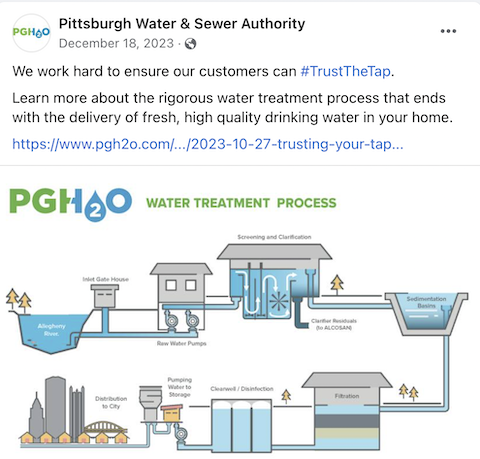
For example, Pittsburgh Water and Sewer Authority’s communication team created a “Trust the Tap” marketing campaign to increase awareness about the city’s water quality. The campaign features fact sheets and social media posts with easy-to-understand infographics that highlight each step in the water treatment process. Later this year, the campaign will also include animated videos to educate customers on water quality.

Example of a social media post for communicating to water customers

An essential water utility communication practice to consider is using a multichannel approach to marketing campaigns. Outreach channels could include bill inserts, email marketing, social media and local TV stations.

For example, the Las Vegas Valley Water District, in partnership with the Southern Nevada Water Authority, takes advantage of paid media ad placements centered around water conservation and water quality.

In the Las Vegas area, residential customers must follow mandatory watering restrictions to limit landscape irrigation, as well as prevent water waste on their property. The ads were created to educate customers on:

  • Current and new water conservation measures
  • Why those conservation measures are important
  • How these conservation measures will impact customers
  • What actions customers need to take

The ads employ humor to communicate to water customers about important conservation measures they need to take, such as changing their sprinkler clock and paying attention to seasonal water restrictions. In true Las Vegas fashion, the ads captured attention with their entertaining, eye-catching and comedic style. One ad even featured Vegas Golden Knights hockey player Ryan Reaves.

The Key to Successful Water Customer Communications

Water utilities provide an essential service to their local communities. Educating and engaging communications can motivate customers to take action, whether reducing their water usage or applying for bill assistance. Communicating to water customers can go a long way to increase education on water safety, quality and reliability.

Learn how to implement water utility communication best practices with proven engagement solutions from Questline Digital.