
Every utility experiences periods of high call volume. Whether it’s a major storm, the introduction of a new rate plan or an unexpected high bill, customer questions can quickly overwhelm call centers.
For most utilities, call centers typically handle between 2 to 3 million customer calls each year, representing an estimated $20 million in annual operating expenses. For utility communicators, reducing avoidable calls can significantly improve efficiency and lower operational costs.
While many utilities focus on increasing staffing during peak times, one of the most effective ways to reduce call volume starts long before a customer picks up the phone. Proactive communications can help anticipate questions and improve the customer experience.
Here are four communication strategies that can help utilities reduce call center volume.
Empower Customers with Self-Service Tools
A majority of customers don’t actually want to contact their utility’s call center. They simply want quick and reliable answers.
Today’s customers prefer to resolve questions on their own, whether they’re checking an outage status, paying a bill or exploring payment assistance options. In fact, 79% of customers expect companies to provide self-service support tools that allow them to resolve issues independently.
However, investing in self-service tools is only part of the solution. Utility customers can’t use resources they don’t know exist in the first place. That’s why website landing pages, emails, social media posts and other communications should guide customers to digital self-service options, including:
- My Account
- Outage maps
- Payment assistance information
- Paperless Billing enrollment
- Energy usage dashboards
For example, a Pennsylvania-based utility promotes its online tool to start, stop or transfer service on the website landing page carousel. According to their website, this self-service resource “makes the process of changing service as easy as flipping a switch.”

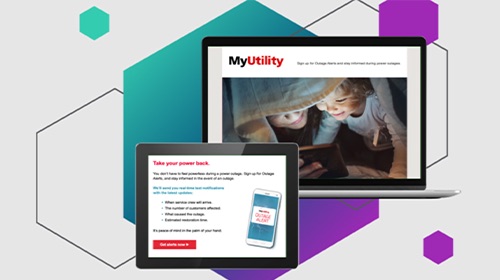
To increase enrollment in its text alerts program, a Southeast utility partnered with Questline Digital to launch a proactive customer campaign centered around the message “Take Your Power Back.” The campaign targeted customers who had not yet enrolled in text alerts and clearly communicated the value of receiving outage updates directly on their mobile devices.
The campaign’s strong call-to-action directed customers to My Account, which increased awareness of the utility’s other self-service resources (including the outage center). The campaign proved successful with a 26% open rate and over 7,800 clicks to enroll.
Beyond reducing call volume, self-service options give customers greater convenience, faster access to information and more control over their utility experience.
Set New Customers Up for Success
One of the greatest opportunities to reduce future call volume happens at the beginning of a customer’s utility journey.
New and moving customers are setting up accounts, learning how to manage their services and adjusting to a new home. During this time, they’re looking for guidance on everything from paying their bill to improving energy efficiency.
Without proactive onboarding, many customers turn to the call center for information that could have been delivered through timely communications.
Common questions include:
- How do I pay my bill?
- How do I report an outage?
- What energy efficiency programs are available?
- How do I manage my account online?
A strategic Welcome Series addresses these questions before they become call center inquiries. By delivering relevant information throughout a customer’s first 30 days of service, utilities have the opportunity to introduce valuable programs and services at the moment customers are most likely to need them.
According to Questline Digital’s 2026 Utility Benchmarks Report, Welcome Series campaigns achieve an average 33.16% Click-to-Open rate (CTOR), making them one of the highest-performing utility communications.
Prevent Bill Shock Before It Happens
Few issues generate more customer inquiries than an unexpected high bill. Whether caused by extreme weather or increased household energy or water use, a surprise bill often catches customers off guard. Without context, many customers contact their utility to ask:
- Why is my bill so high?
- Is my meter accurate?
- Has my rate changed?
- What can I do to lower my next bill?
High-bill alerts and energy usage notifications give utilities an opportunity to proactively communicate with customers when energy consumption begins to spike. Instead of waiting for the monthly bill to arrive, utilities can immediately notify customers when their usage is trending higher than normal.
An effective high bill communication provides meaningful context by explaining why energy consumption is rising, how seasonal patterns may be contributing and what customers can do to lower their next bill. It can also introduce valuable resources, such as budget billing, payment assistance programs and energy usage dashboards.
Some utilities are taking this approach a step further through personalized customer communications. When a large Northeast utility wanted to improve customer understanding of its billing programs – including paperless billing, auto pay and budget billing — it partnered with Questline Digital to deliver personalized videos tailored to each customer’s account and energy usage. The videos made complex billing information easier to understand while providing clear next steps for enrollment.
The educational campaign generated more than 10,400 unique video views and 4,800 call-to-action clicks, while customer feedback showed that 96% of viewers found it easier to understand the available billing programs.
By proactively educating customers with personalized, easy-to-understand communications, utilities can reduce confusion, encourage self-service and help minimize billing-related inquiries.
Deliver Proactive Communications Before Major Events
Many of the events that generate the highest call volume are predictable. Utilities know, for example, when severe weather is approaching, planned maintenance is scheduled and new rate plans are being introduced.
Each of these moments creates an opportunity to communicate before customer questions begin flooding the call center. Whether through email, SMS, website updates or social media, timely communications reduce uncertainty and help customers understand what to expect.
For example, a planned outage notification should communicate more than the date and time. It should explain why the work is necessary, identify the neighborhoods that will be affected, provide an estimated restoration timeline and outline any actions customers need to take before, during and after the outage.
This approach is especially valuable when severe weather is in the forecast. As storms move into a service territory, customer uncertainty can escalate quickly, leading to a surge in calls.
Effective storm communications should guide customers:
- Before the storm: Encourage customers to prepare for potential outages, review safety recommendations and sign up for outage alerts.
- During the storm: Share outage status, estimated restoration times, safety information and links to outage maps.
- After the storm: Provide restoration updates, explain the cause of the outage and direct customers to additional resources.
One Northeast utility partnered with Questline Digital to create a proactive storm communications campaign that kept customers informed before, during and after severe weather. The campaign achieved a nearly 32% lifetime email open rate, demonstrating customers’ strong demand for timely outage resources.
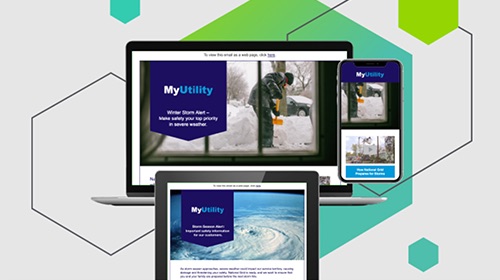
Customers are far more likely to trust their utility when they understand not only what is happening, but also why it’s happening. Keeping customers informed before, during and after an outage can reduce uncertainty while easing the burden on the call center.
Communication is a Call Reduction Strategy
Reducing call center volume isn’t simply about hiring more agents or investing in new technology. It’s about giving customers the right information, tools and resources before they ask for them.
When utilities anticipate customer questions, customers feel more informed and empowered, while call center teams can focus on resolving more complex customer needs. Ultimately, effective communications strengthen trust, improve operational efficiency and create a better experience at every stage of the customer journey.