If it feels like you’re being bombarded with advertisements, well, that’s because you are. The average consumer is exposed to upwards of 5,000 ads every day … and growing. You’re probably pretty good at tuning out most of those messages. Of course, your customers are good at tuning out messages, too.

That’s why content marketing can be so effective. With this approach, you build long-term satisfaction by providing customers with information that actually interests them — instead of bombarding them with ads they don’t care about.

Do your messages cut through the clutter to reach customers? Here are three great content marketing ideas from other industries that energy utilities can apply to their own content strategy.

1. Makeup.com

At first glance, Makeup.com looks like it’s produced by a glossy fashion magazine. The robust website is filled with makeup product reviews, how-to’s, expert tips and helpful videos.

In fact, the site is owned by cosmetics giant L’Oreal. Yet there’s one thing you won’t find on Makeup.com — blatant sales messages. Ads would be a turnoff and easy to tune out. Instead, L’Oreal attracts customers by offering advice and information that interests them. And, not coincidentally, it helps them use more makeup.

What utilities can do: Help customers, don’t sell to them. Provide content that helps them take control of their energy use, such as efficiency tips or smart home technology advice. When they’re ready, these informed customers will be more open to your program promotions or other marketing messages.

2. Learn from Experience

Farmers Insurance is known for their quirky TV commercials featuring actor J.K. Simmons reenacting actual, elaborate mishaps. Farmers’ content hub, Learn from Experience, plays off this theme with entertaining and useful articles drawn from real-life examples.

But this content isn’t about insurance. Instead, it’s about all the things that people need to insure, from cars and homes to life-changing events like weddings and births.

What utilities can do: Energy is critical to customers’ daily lives. Yet their questions and interests may not always be specific to energy use. Look for energy-adjacent topics to build content around. For example, instead of focusing on the energy-saving benefits of a smart thermostat, show customers how the technology also makes their lives more comfortable and convenient.

3. I Love You, Colonel Sanders!

An anime-style dating simulator that’s finger-licking good? I Love You, Colonel Sanders! puts gamers in the role of a culinary student who wants to date their classmate, Colonel Sanders. If it works out, he might even ask you to be his business partner and open a chain of chicken joints.

If you’re wondering what this has to do with selling fast food, the answer is, not much. And yet, the free video game — created by Kentucky Fried Chicken and distributed on the Steam online game platform — has received more than 8,000 positive reviews and generated lots of buzz. In other words, KFC built strong connections around a memorable interactive experience and got customers talking about the brand.

What utilities can do: Make it fun! Educational content doesn’t have to be boring. In fact, interactive games and quizzes aren’t just more engaging, they’re more memorable as well. Customers are much more likely to absorb and retain information when it’s presented as entertaining content.

Every day, as more digital clutter invades our lives, it gets harder to reach customers with truly important messages. By learning from these content marketing ideas and developing your own strategy, your energy utility doesn’t need to push its messages on customers. Instead, customers will come to you to seek out information and advice that interests them.

Looking for new ideas to power your utility’s content strategy? Find out how Questline Digital can help.

Content marketing is both an art and a science — with the power to build long-term relationships with energy utility customers. In this webinar, Brian Lindamood, Questline Digital’s VP of Marketing & Content Strategy, shares tips to help energy utilities create a winning content marketing strategy.

Building blocks of customer satisfaction 

Instead of just promoting programs or services, content marketing is a strategic approach focused on using high-quality and relevant content that customers want and need. Content marketing positions your energy utility as a trusted resource in customers’ lives.

“Content marketing is the lifeblood of the Internet,” Lindamood says. “Content is what Google finds when it searches your website, what your customers share on social media, what you deliver to customers in emails. Without useful content, that customer relationship becomes transactional and your digital marketing is essentially just sales, not about building a long-term relationship.”

In traditional marketing, there is always a gap between what your company has to say and what your customers want to hear. You can reach a broad audience with a traditional push marketing strategy, especially if you have a large advertising budget. But it’s all too easy for customers to tune out information that doesn’t interest them. Using content in a pull marketing approach, utilities can close that gap by connecting with customers around their interests.

The art and science of content marketing

As an art, content marketing helps to build connections by delivering content that’s informative, entertaining and engaging. The key is finding out your customers’ wants, needs and interests and building content around them.

As a science, content marketing allows you to track the success of any given campaign. You can get measurable results and see how you’re engaging with a particular target audience.

Content can take many different forms, including articles, infographics, videos and social media posts. Energy utility customers are increasingly looking for visual and interactive content. However, text-based articles are still effective for explaining in-depth technical content, especially for a business audience.

There are a wide variety of digital platforms to distribute your content, including:

  • Blogs and websites
  • Mobile apps
  • Social media platforms
  • Email
  • SMS/text
  • CRM/marketing cloud platforms
  • Voice-activated speakers

The 4 Ps of content strategy for energy utilities

How do you turn quality content into an effective content strategy? Your content must have purpose, reach the right people, use the right platforms and deliver measurable performance metrics.

  1. Determine your purpose. Your content must have a goal. For example, is your energy utility looking to drive enrollment into a program or build customer satisfaction?
  2. Identify your target audience. Who are your customers and what are they interested in? Keep in mind, you might have a different message for each customer segment.
  3. Choose the right digital platforms. What platforms will be most effective at reaching your target audience? A successful content strategy typically includes a mix of web, email and social media.
  4. Measure performance. How do you measure your goals? Performance metrics are essential to determine if your content is successful. If there isn’t a way to measure your goals, it’s just content, not a content strategy.

An essential investment 

While it takes time and money to invest in high-quality, relevant content, this investment pays off. Content creates an emotional connection with customers, which builds a relationship with your energy utility over the long haul. Plus, customers are more likely to share engaging content with friends and family on social media. It’s also essential for your content to be professional, accurate and useful, as your customers view your energy utility as an energy expert and helpful resource.
With content marketing, you’re not pushing a message out to your customers. Rather, you’re pulling them in with content that they find valuable and interesting. When it comes to improving customer satisfaction and meeting program goals, content marketing has a big impact.

Learn more about Questline Digital’s proven approach to content marketing for energy utilities.

Using humor as part of a marketing campaign is a tried-and-true way to make a memorable connection with your audience.

The Super Bowl is one of the most expensive and high-profile marketing events of the year. (It’s also a football game.) USA Today estimates that “one-quarter of Americans watch the Super Bowl for commercials alone” and that these commercials are largely made up of two main emotions: sentimental or silly. Inevitably the big game is followed by days of conversations and video sharing — not about exciting touchdowns or missed passes, but about hilarious ads.

Why is this such a universal phenomenon? Simply put, humor works. We remember the Super Bowl commercials that make us laugh, and we want to talk about them with our friends.

Energy utilities can benefit from this same appeal. While an outrageous Super Bowl ad might be off-brand for most utilities, a little laughter can still be effective — and appropriate — for making energy content more engaging and memorable.

Learn the main reasons why humor is an effective marketing strategy to increase brand awareness and customer engagement.

Humor creates rapport with your audience

Non-offensive jokes can easily establish likeability and trust. Most great speeches often begin with a joke. Humor not only humanizes your energy utility, but also creates a connection with your customers. Humor works best when it is based upon shared experiences. For example, Questline Digital’s article “Go Green, Save Energy and Feel Smug” establishes a universal emotion of pride and triumph while also highlighting energy efficiency in an unexpected way.

Humor helps trigger memory

Scene from humorous video series Dont Do It Dave

A goal of content marketing is to create brand recognition in customers’ minds. Studies show that consumers are most likely to remember information (and where they received it) that they perceive as humorous. For example, Questline Digital’s video series “Don’t Do It Dave!” demonstrates the importance of household safety in a way that is fun and memorable. It’s far more likely to prompt corrective customer behavior than dry, serious content.

There are pitfalls, of course, with this approach. In fact, several well-known marketing campaigns have experienced backlash over a poorly executed punchline or pun. By taking advantage of content that has been previously shared and well-received you can avoid this danger.

Remember, when done well, humorous content is a fun and unique way to engage with customers. Make sure your energy utility is using humor in a way that fits your brand and customers’ interests, and you will surely see customer satisfaction increase.

Power your content strategy with the entertaining videos and social posts in Questline Digital’s Content Catalog.

In the energy utility industry, connecting with customers is a notoriously difficult challenge. Like every brand, energy utilities are vying for customer attention in an overwhelming, oversaturated digital landscape. In fact, a majority of American consumers are exposed to between 4,000 and 10,000 ads every single day. For brands of all shapes and sizes, content marketing is a powerful tool to break through the digital clutter.

A consistent content strategy positions your energy utility as a trusted source of information that works to improve your customers’ lives,” says Brian Lindamood, Questline Digital’s Vice President of Marketing & Content Strategy. “It helps you build a strong, long-lasting relationship with customers. Then, when they sign up for a program, it’s based on trust and familiarity, not a one-time sales message.”

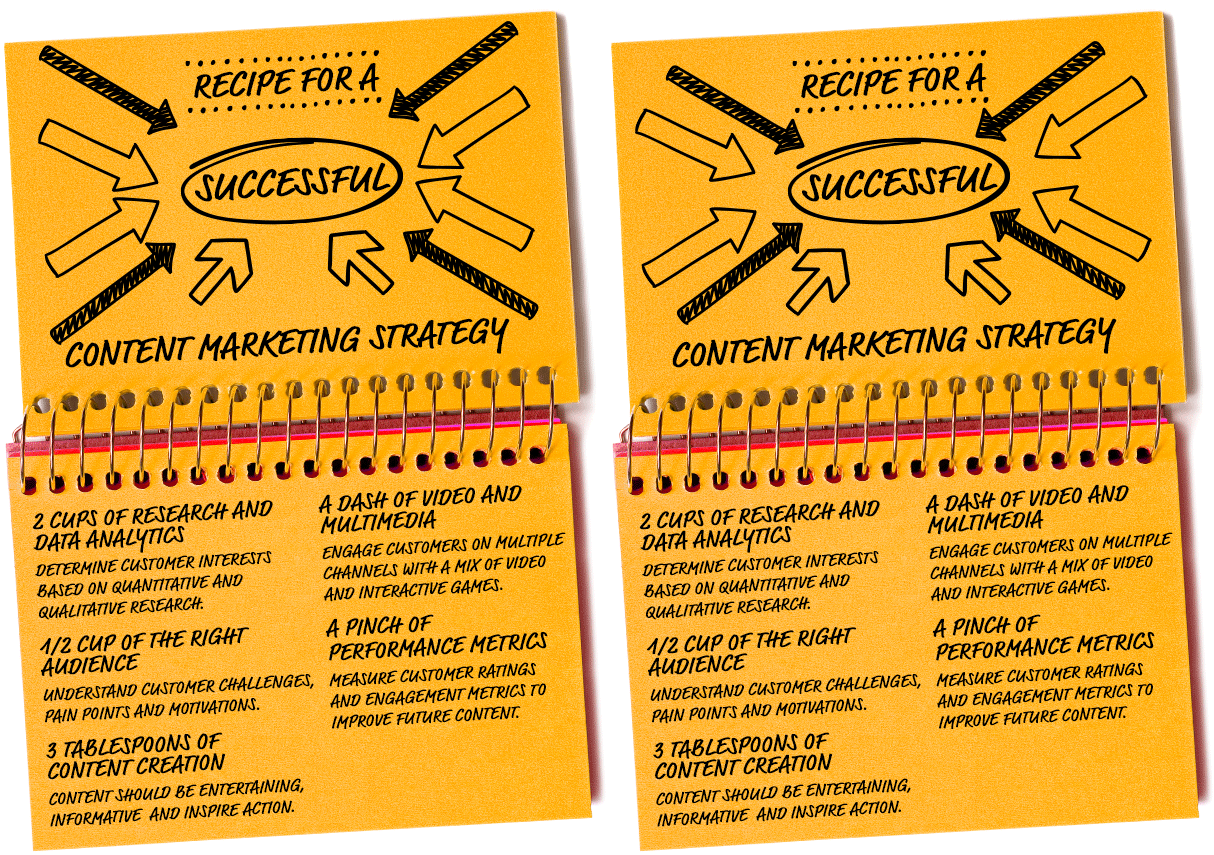
List of ingredients that go into content marketing strategy

Making connections

Instead of a one-time sales message, content marketing provides useful information that resonates with a specific audience. It’s also three times as effective as paid search advertising. To maximize engagement with energy utility customers, content has to be impactful, whether answering a question, responding to a pain point or providing actionable information on a relevant topic.

Growing consumer interest in solar power, electric vehicles and smart home technologies are great avenues to explore in content marketing. According to a Smart Energy Consumer Collaborative study, utilities emerged as the entity consumers relied on the most for accurate information about new technologies like solar power and EVs.

For example, Questline Digital recently launched a solar energy content marketing solution to help energy utilities become a resource for customers interested in adding solar power to their homes and businesses. This solar content helps energy utilities answer customer questions and provide useful advice.

“Energy utilities are competing with every other brand for the time and attention of their customers,” Lindamood says. “That’s why it’s so important to build lasting, meaningful connections with customers. When customers know they can rely on their energy provider for helpful advice, they will seek you out for that information.”

5 benefits of content marketing for energy utilities:

  1. Improve customer satisfaction: Content marketing positions an energy utility as a trusted source of information that improves customers’ lives.
  2. Increase program participation: Customers who see their energy utility as a trusted resource are more likely to engage with program promotions.
  3. Reduce call center demand: When your content answers customers’ questions, they rely less on telephone calls.
  4. Boost new technology adoption: Informed customers understand how their smart home and smart grid benefits their community.
  5. Decrease paper bill costs: Engaged customers are more likely to have a digital relationship with their energy utility.
Chocolate chip cookies

Know your customers

The first step to a successful content marketing strategy is understanding your audience. Before diving into the content creation process, you need to find out what topics resonate with your customers. What are the challenges and pain points among a particular customer segment? What are growing consumer trends? What are common questions received in your call center? Your content marketing strategy should speak directly to your customers’ specific needs and interests.

In addition to the right messaging, the type of content is also important. Customers engage differently, and retain different information, whether they are reading an in-depth article, scanning an infographic or watching a video.

“The key to this approach is a solid foundation of consumer research,” Lindamood says. “It is critical to know what interests your customers have, what questions you can answer, and what type of content has resonated in the past.”

According to Questline Digital’s Energy Utility Benchmarks Report, residential customers prefer eye-catching infographics, videos and quizzes. In comparison, small and medium-sized business customers, who are traditionally short on time, engage most with infographics, videos and slideshows. For Key Accounts business customers who seek out rich information, in-depth articles remain the most popular content.

Despite higher production costs, video and interactive content are proven to deliver a higher ROI based on the level of engagement. Access to a large library of content, like Questline Digital’s over 4,500 assets, can help deliver a successful content marketing strategy.

Educating and empowering customers

As consumers continue to be inundated with digital ads, content marketing will become a vital strategy to drive engagement and build lasting relationships with customers.

Learn how Questline Digital can help your energy utility break through the clutter with a targeted content marketing strategy.

As electric vehicles continue to grow in popularity, energy utilities have the opportunity to drive the trend forward as both a trusted resource and EV adoption influencer.

In 2018, more U.S. consumers purchased electric vehicles than ever before – an 81% increase from the previous year. While electric vehicles still only make up a small percentage of total U.S. car sales, demand continues to grow each year. A recent Deloitte report projects that electric vehicles will be priced on average the same as gasoline-powered vehicles by 2022.

Encouraging EV adoption

With the right resources, energy utilities have the power to educate residential and business customers about the benefits of electric vehicles and encourage EV adoption. According to a Smart Energy Consumer Collaborative (SECC) survey, 42% of consumers said involvement or endorsement from their utility would influence their adoption of new technologies like EVs.

When it comes to EV adoption, barriers are often caused by a lack of knowledge about technology and perceptions of high upfront costs. In fact, fewer than 22% of consumers surveyed claim to have a complete understanding of electric vehicles.

Top 5 roadblocks to EV adoption:

Residential customers: 

  • 65% – Not enough charging stations in the area 
  • 60% – Upfront cost of EVs is too high
  • 50% – EVs do not have enough range
  • 50% – EVs increase electric bills significantly
  • 48% – Too expensive to install charging equipment at home

Business customers:

  • 55% – Prohibitive initial purchase price – 55 percent
  • 44% – Inadequate charging infrastructure at facility
  • 35% – Inadequate product availability
  • 32% – Not enough public charging infrastructure
  • 24% – Difficult to get buy-in from top leadership

From charging stations to EE programs

As a provider of electric vehicle “fuel,” energy utilities are a vital source of information for electrification and energy efficiency programs. EV owners are looking for ways to save money and better manage their energy usage. That’s why it behooves energy utilities to promote programs like time-of-use billing and managed charging to EV customers:

  • Electrification: Consumers are increasingly managing their energy usage through smart meters. Encourage EV customers to take advantage of this trend to more effectively manage their energy usage.
  • Time-of-use billing: Introduce EV owners to off-peak rates and incentivize customers to time-shift their energy usage. For example, customers would receive a lower rate by charging their electric vehicle during off-peak hours of 11 p.m. to 7 a.m.
  • Managed charging: This type of program is key to managing increased demand on the grid. By encouraging smart grid-capable EV charging, customers can be rewarded for participating in demand response programs.

Unlike owning a gasoline-powered vehicle, EV ownership is truly a lifestyle. EV owners need to install charging equipment in their home, and business customers must install charging infrastructure at their facilities. However, many consumers are unaware that energy utilities provide EV services. In fact, 60% of consumers said they would look to an outside retailer instead of their energy utility.

The road ahead

As more and more customers choose to live a sustainable, eco-friendly lifestyle, electric vehicles will be at the forefront of this movement. In fact, the International Energy Agency forecasts that 125 million electric vehicles will be on the road worldwide by 2030. That’s why energy utilities need to position themselves not only as EV experts, but as trusted smart home and electrification service providers.

Questline Digital’s Electric Vehicles Content empowers energy utilities to drive EV adoption.