Whether you’re joining a cheese of the month club or signing up with a new video streaming service, you’re sure to receive some kind of welcome message.

Whether that message will be helpful or worthy of the trash bin is to be determined. You might not be wowed by the content (or find it very helpful), but it will be in your inbox waiting for you.

Some energy customers find their welcome experience to be similarly lackluster when starting service. But what if that welcome was truly valuable?

What Should Your Welcome Message for Customers Include?

A new utility customer will need to be informed of many things. Your utility will want to provide answers to common questions and guide them through an optimal customer journey.

But be careful not to overwhelm your audience. You can’t effectively answer all questions at once. A single email with “link soup” will make for a complex customer experience.

Instead, prioritize what you need customers to know or do first.

How many emails in a Welcome Series

Most marketers send just one welcome email, but Questline Digital data shows three to five email messages is best.

Going beyond five emails in a Welcome Series tends to result in lower open rates for later sends. If you need to include more than five emails, make sure important information like billing options, outage alerts and My Account setup are frontloaded in your communications.

Pro tip: Consider numbering the emails in the subject line or header (for example, first of four-part series) so subscribers know to look out for the subsequent messages.

How often to send welcome messages

The cadence of your welcome emails shouldn’t overwhelm customers or be drawn out. We recommend sending an email every two to three days or once every week. This frequency keeps your utility top of mind but doesn’t bombard customers.

Additionally, it’s important to send the first email of your welcome series within 24 hours of account setup. If possible, reduce lag time to 10 minutes or less from the time of the service signup. Given the multitude of other marketing messages competing for consumers’ attention, you’ll want your welcome message for customers to hit inboxes while your utility is still top of mind.

What to include in your welcome message for customers

Within your series of messages, it’s essential to answer commonly asked questions, point to available resources and prompt customers with actions you want them to take.

An example Welcome Series could look like:

  • Email #1 – Welcome and community message
  • Email #2 – Instructions on how to set up My Account preferences
  • Email #3 – Explanation of billing options
  • Email #4 – Prompts to sign up for eNewsletters and/or programs
  • Email #5 – Resources to help you save energy

Case Study: Optimizing Welcome Messages for Customers

Questline Digital worked with an energy utility client to develop and send a new residential Welcome Series. One year later, we took a deep dive into the performance metrics to see how we could enhance the series to achieve even greater engagement.

We found that how many emails in a Welcome Series matters, and so does the cadence of information. With small tweaks, customer communications can be optimized. Let’s take a look.

Year One Welcome Series

Six emails sent to residential customers starting new electric service:

  1. Storm and outage resources
  2. Sign up for our energy utility newsletter
  3. Explore our My Account resources
  4. Tools to help you manage your energy bill
  5. Tips to reduce your bill
  6. Resources to help you save energy

Overall Open Rate: 32.9%

Overall Click-to-Open Rate (CTOR): 26.6%

Year Two Welcome Series

Five emails sent to residential customers starting new electric service:

  1. Explore our My Account resources
  2. Storm and outage resources
  3. Sign up for our energy utility newsletter
  4. Billing payment options
  5. Resources to help you save energy

Overall Open Rate: 41.7%

Overall CTOR: 31.7%

By looking at the overall email content, design and key messages, our team determined:

How many emails in a Welcome Series matters

Five emails were more effective than six. Emails five and six from the original series were comparable, with both offering savings tips and resources. In the revamped series, only one savings email was sent.

Less content was more

In the first series, each email was jam-packed with links, images and multiple messages, which could have distracted from the main point and call to action. In the updated series, supporting content was pared down and the visual design was refined.

New branding elements could be easily incorporated

The energy utility had recently refreshed its branding, making this Welcome Series a perfect place to include new identity requirements. There was also an opportunity to add links that connected customers to new website content.

The customer journey needed a little guidance

While much of the content was similar from the first series to the second, the order of those messages shifted. For example, the original series began with a message about storm alerts and outage resources. In comparison, the second series opened with a message about taking control of one’s utility account — a topic of much higher interest to a new customer.

By restructuring the order and number of emails and adjusting the content, the second Welcome Series was able to better connect with customers, boosting the open rate by nearly 27% and driving 19% more engagement.

With careful planning, thoughtful strategy and inspiring writing and design, you can achieve real results. As our data demonstrates year after year, crafting a series of welcome messages for customers can set the stage for a long, strong relationship.
Welcome new customers to your utility with a proven Welcome Series solution from Questline Digital.

Paperless billing incentives are a tactical way to increase signups to your energy utility’s eBill or paperless billing program. In addition to engaging customers, incentives drive higher click-through rates (CTR) and conversions for eBill campaigns. 

What are paperless billing incentives?

Paperless billing incentives can vary, ranging from high-value prizes like tickets to a sports game or smaller giveaways for every customer who signs up for eBilling (for example, LED light bulbs and gift cards).

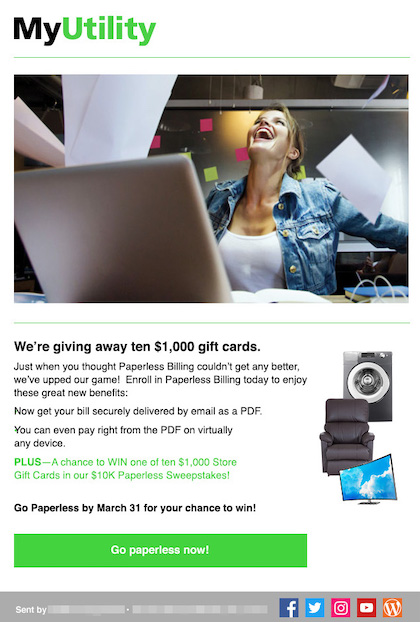
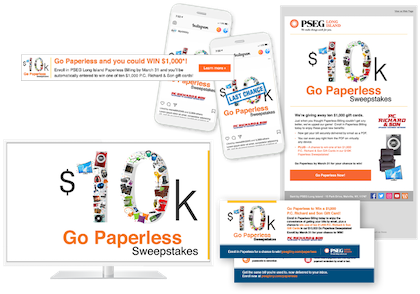
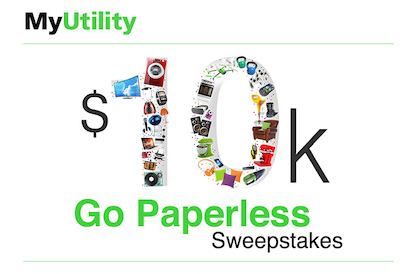
Example of Paperless Billing Incentives ad for sweepstakes

Questline Digital data shows that paperless billing promotional emails with incentives have a 17% higher open rate and 28% higher CTR than messages without incentives. Customers enjoy having the opportunity to earn prizes, especially after learning about the many benefits of paperless billing.

Still, even after identifying the right incentive, it can be daunting to build a campaign strategy that maximizes conversions.

Success starts with a subject line

An incentive-focused paperless billing email begins with an effective subject line that clearly explains the offer. If the giveaway is immediate, let your audience know by using language like “Claim your reward now.”

Follow these subject line best practices for paperless billing incentives:

  • Subject lines that clearly state the incentive reach 13% more of their intended audience compared to subject lines that only imply an offer.
  • Subject lines with “We’ll Pay Your Bill” in the title drive high open rates, but fewer click-throughs.
  • Conversely, subject lines with the word “free” typically do not perform well. This word is often associated with spam.

High-ticket prizes vs. low-cost giveaways

It’s best to test high-ticket and low-cost paperless billing incentives to see what resonates most with your utility’s customers. Consider having a mix of promotions included in your campaign strategy to connect with different customers and vary the giveaways.

Keep in mind that bigger paperless billing incentives do not necessarily mean bigger engagement. While large-dollar-amount prizes drive customer interest in opening promotional emails, that enthusiasm can sometimes be diminished through the contest-entry process.

The “cost” for entering into the drawing is an immediate conversion into paperless billing; this can create an unequal transaction where your customers are asked to give up paper bills for a small chance to win a reward.

Example of Paperless Billing Incentives with Gift Card Contest

In comparison, we’ve found small incentives are often more effective because they have an immediate, guaranteed payoff. According to Questline Digital data, compared to a contest to win one big prize, small incentives for every customer have a 13% higher open rate and 82% higher CTR.

Based on an analysis of the paperless billing incentives campaigns deployed by Questline Digital, we have found:

  • Awarding a $5 gift card to all signups converts better than enter-to-win contests of $1,000 or more.
  • Products like LED light bulbs rank second among the best drivers of click-throughs.
  • Thermostats and smart home device giveaways are also top performers.
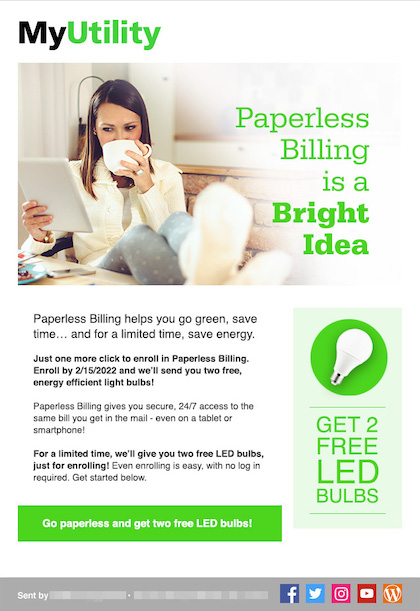
Example of Paperless Billing Incentives with LED giveaway

Make incentives easy to earn

Making the process easy to sign up for paperless billing is key to increasing conversions. In fact, one-click opt-ins into paperless billing programs increase conversion rates by 22%.

It should be equally easy to earn paperless billing incentives. Customers will appreciate a simple, one-click process to enroll in paperless billing, but the immediate question following signup is, “When will I get my prize?”

Make sure your utility is prepared to answer this question in detail. Share next steps with customers, including if you need to receive their mailing address for prize delivery, if they need to print a coupon or any other steps needed to redeem their incentive.

Make this process just as simple as enrolling and your customers will wonder why they didn’t make the switch sooner.

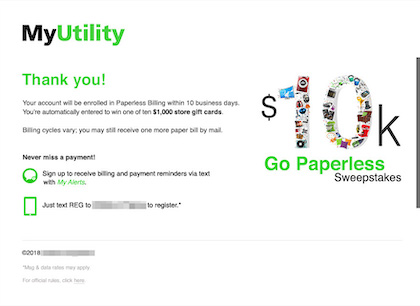
Example of Paperless Billing Incentives sweepstakes entry message
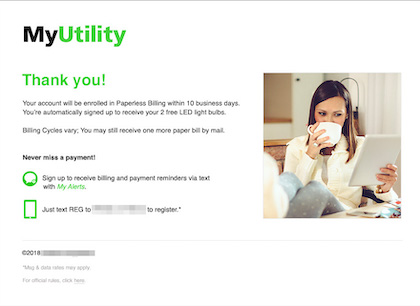
Example of Paperless Billing Incentives thank you message

The power of paperless billing incentives

Everyone likes free things. By offering paperless billing incentives to encourage conversions, customers are more likely to embrace the benefits of eBills.

Paperless billing incentive campaigns are also a great way to encourage re-enrollment from customers who may have unenrolled from past eBill programs. Maybe they unenrolled by accident or didn’t quite understand the benefits. Either way, an incentive-based campaign can be a perfect re-introduction.

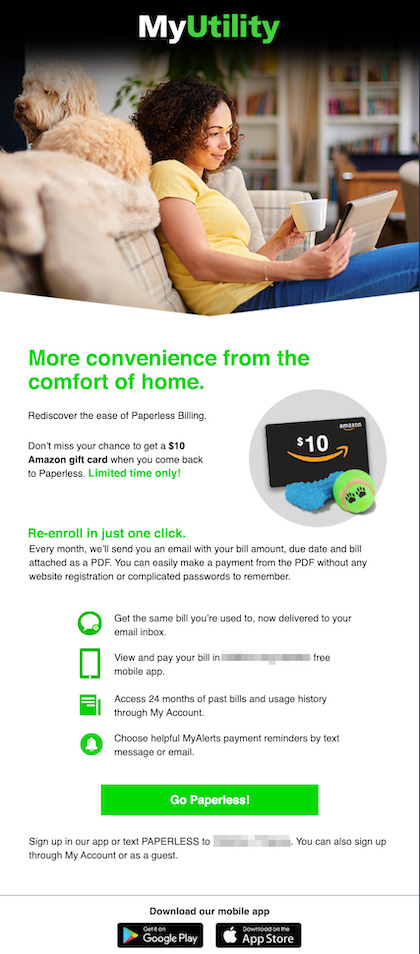
Example of Paperless Billing Incentives with Amazon Gift Card

Incentives provide a massive return on investment for energy utilities, saving operational costs every month for every paperless customer. That’s what we like to call a win-win.

Drive more paperless billing conversions with a digital engagement strategy from Questline Digital.

The benefits of choosing paperless billing may be obvious to you. But your customers may not understand these benefits, or they may not be properly incentivized to give up paper bills and make the switch. Follow these e billing best practices to improve your energy utility’s e bill marketing and boost conversion rates.

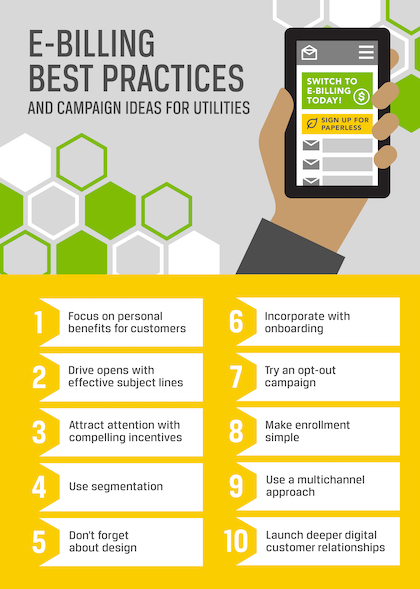
Infographic listing best practices for energy utility paperless billing promotions

E billing best practice #1: Focus on personal benefits for customers

Your messaging should help customers understand the benefits of paperless billing and overcome potential barriers that might stand in the way of adoption. The most successful messages speak directly to the customer, use personal language (“you”) and address the ways that paperless billing makes everyday life easier. Focus on solving problems, not just offering a new payment option.

In Questline Digital’s experience creating paperless conversion campaigns for energy utilities, the benefits that most appeal to customers are: 

  • Simple; easy to manage and pay from anywhere
  • Affordable; no need to buy stamps or worry about late fees
  • Convenient; saves time and fits into your on-the-go lifestyle
  • Eco-friendly; reduce your environmental footprint by using less paper
  • Reliable; never forget or lose track of a bill again
  • Secure; safely manage statements and payments online

E billing best practice #2: Drive opens with effective subject lines

The best email subject lines are upbeat, active and strike a personal tone while encouraging the customer to open the message. Short subject lines are best for capturing the attention of residential customers. Questline Digital data shows that subject lines with 40 to 50 characters perform best.

According to metrics from the many paperless billing campaigns Questline Digital has deployed for energy utilities, the top-performing subject line was, “You’ve got eBill and a $10 gift card.” This campaign achieved a 77% open rate, compared to 21% for the average campaign.

E billing best practice #3: Attract attention with compelling incentives

Incentives pay off in paperless billing campaigns, enticing customers with the promise of a contest prize or financial benefit. Not only do incentives boost email open rates, but incentives also increase conversions.

The most successful incentives are small giveaways awarded to everyone who signs up for paperless billing (including LED lightbulbs and $5 gift cards). Contest entries that award a single large prize (such as $1,000 cash or major league sports tickets) have been less successful.

Offering an incentive pays off with higher conversion rates (and by reaching participation goals more quickly). Paperless billing campaigns that award an incentive achieve a 34% conversion rate on average. In comparison, campaigns with no incentive achieve a 23% conversion rate on average.

Example of e-billing best practice incentive campaign

E billing best practice #4: Use segmentation

The same message or incentive is unlikely to work with all customers. Instead, your utility should segment customers into groups and build campaigns that speak to the specific concerns of each audience.

McKinsey’s Next in Personalization 2021 Report shares that, “71% of consumers expect companies to deliver personalized interactions. And 76% get frustrated when this doesn’t happen.” Furthermore, McKinsey shares that companies that excel at personalization generate 40% more revenue from those activities than those who don’t.

As this data showcases, personalization is a must-do e billing best practice. Here are several ways you can segment your paperless promotion emails:

  • People who pay online but still get paper statements
  • Follow up with those who didn’t complete e bill signup
  • Eco-friendly message to EV customers
  • Convenience message to busy professionals and parents
  • Security message to older audiences or customers with smart security systems
  • Decluttering and convenience message to small business owners

E billing best practice #5: Don’t forget about design

You want the imagery in your e bill promotions to be relatable to customers, eye-catching and relevant. Consider your specific audience demographics and build in visual elements that help customers see themselves in your campaigns.

  • People – age, gender, race, socioeconomic status
  • Region-specific – weather, transportation, landscape, city landmarks
  • Customer interests – sports, culture, the environment, value and motivations

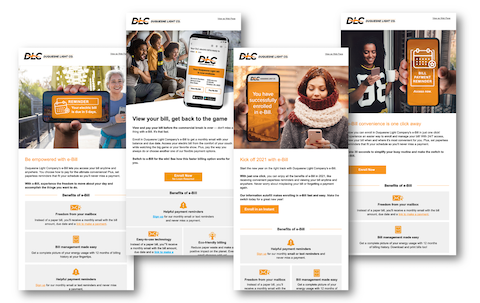
For example, Questline Digital worked with the Pittsburgh electric utility Duquesne Light to alter imagery to represent Steelers and Penguins sports team colors. This small alteration made the email campaign more relatable to the group of recipients.

How you display these images also matters. Consider designing around the inverted triangle strategy, grabbing a customers’ attention at the top, building anticipation in the headline and first few sentences and then taking them to the call-to-action.

To ensure the email is easy for customers to read, there should be plenty of white space throughout the design, clear line breaks and adequate use of bullets or icons.

Example of e-billing best practice email design

E billing best practice #6: Incorporate with onboarding 

It can be difficult to encourage customers to switch their behaviors, even when there are clear benefits or reasons to do so. Humans are creatures of habit and change isn’t easy.

Get customers enrolled in e billing on day one. Share electronic payment options at the start of service so you don’t have to convince customers to change later. Include prompts in onboarding materials and welcome emails, or run e billing campaigns at the beginning of the customer lifecycle.

E billing best practice #7: Try an opt-out campaign

Rather than asking customers to sign up, automatically enroll them in e bill and give them an opportunity to opt-out. If you take this approach, ensure you have adequate communication that keeps customers informed.

For example, Questline Digital ran an opt-out campaign with a Southeast utility. We targeted customers who received both a paper and e bill, but who had made at least one electronic payment in the past. This audience segment was automatically enrolled in the program but given the chance to opt-out and continue receiving paper bills. The opt-out campaign received positive customer feedback, with 90% of customers remaining enrolled. 

E billing best practice #8: Make enrollment simple

Customers abandon complicated digital processes. In fact, a study by Splitit showed that 87% of online shoppers abandon their carts during the checkout if the process is too long or complicated. Signing up for paperless billing is no different – customers want frictionless digital experiences.

Remove as many steps as possible for your customers. One effective way to do this is by auto filling forms with dynamic coding.

Questline Digital worked with PSE&G to set up one-click enrollment, making the sign-up process as easy as possible. Customers who clicked on the call-to-action within an email campaign were automatically taken to a landing page to confirm their information in a prepopulated form and enroll in paperless billing. The ease of one-click signup encouraged customers to make the switch, enrolling 21,945 customers.

E billing best practice #9: Use a multichannel approach 

Unfortunately, you can’t rely on email to convert all your customers. To get the best possible results, your utility will need to employ a multichannel approach and spread out the heavy lifting.

Complement your email campaigns with channels like direct mail, social media, outdoor signage and online advertisements. Your customers may need to see your message multiple times before they act. If you can get in front of customers via multiple mediums, they’re more likely to convert.

E billing best practice #10: Launch deeper digital customer relationships

Paperless billing conversions create an opportunity for long-term engagement by cementing the customer’s digital relationship with their energy provider. Once converted, paperless billing subscribers are more engaged with email communications and less likely to unsubscribe compared to customers who receive paper bills.

Before converting to paperless, energy utility customers have an average email open rate of 25%, according to Questline Digital performance metrics. After converting, paperless billing customers have an average open rate of 33%.

This higher engagement rate is an opportunity to connect with customers beyond their monthly e bill — sharing program promotions, energy efficiency advice and other educational content. By following these e billing best practices and boosting conversion rates, you can reduce operational costs and build long-lasting relationships between your energy utility and its customers.

Convert more customers to paperless billing

Converting customers to e bill doesn’t have to be difficult. Employ these e billing best practices and realize the many benefits of going paperless.

Learn how Questline Digital’s paperless billing solution and help your energy utility reach your e bill conversion goals.

As the new year approaches, marketing teams everywhere are planning their communication strategies to reach customers in 2022. For energy utilities, this is no different. It’s a perfect time to reflect on what worked or didn’t work in the past and revitalize your marketing efforts for the year ahead.

In our recent webinar, “2022 Email Marketing Best Practices & Trends,” Bethany Farchione (Questline Digital) and Cynthia Price (Litmus) shared their forecast for design and marketing trends and how utilities can prepare to make the biggest impact on customers.

A Look Back at Last Year’s Email Marketing Trends

Farchione began the webinar by taking a step back to discuss the email marketing trends Questline Digital saw in 2021, including:

  1. Personalization and segmentation
  2. Automated campaigns
  3. Interactive emails
  4. Bold/bright email designs
  5. Multichannel marketing

“For 2021, the biggest thing we saw was a massive rise in digital adoption and digital communications,” she said. “What’s important as we move forward is maintaining and growing that engagement into the next year.”

She explained that personalization and segmentation became major influencers, impacting nearly every communication as utilities tried to better target their audiences. “These trends are not going away in 2022,” Farchione added. “We expect that they will continue to grow in importance, but we do see a handful of new trends being added.”

A Look Ahead at Email Marketing Trends for 2022

Farchione proceeded to look ahead to the major themes of 2022:

  • Email marketing will continue to be extremely important
  • The goal for utilities is to keep engaging with the digital customers they acquired in 2021
  • Focus on continuing to improve digital services and experiences

“A new study from DMA Consumer Tracker says that 96% of consumers check their email every day and over 70% of consumers believe that email is the best channel for company contact,” she said. “So, while email has been around forever, it’s still really important within the customer communication mix. When done right, it’s actually a conversation with your customers, which is really valuable and powerful.”

Farchione also shared the most important trends to watch in the coming year.

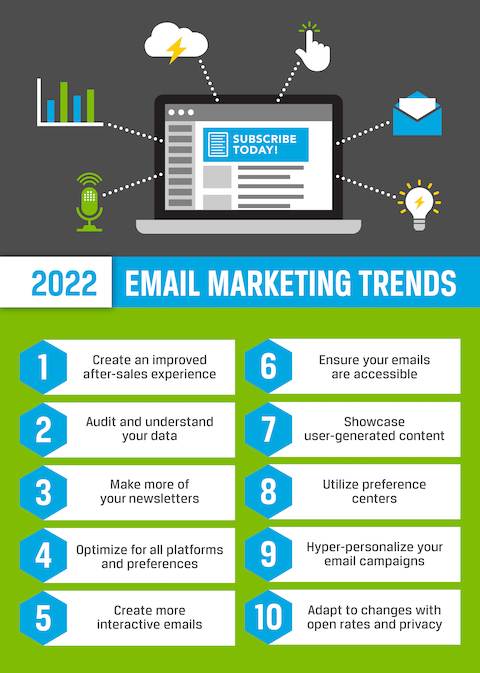
Top 10 email marketing trends of 2022:

  1. Create an improved after-sales experience
  2. Audit and understand your data
  3. Accomplish more with your newsletters
  4. Optimize for all platforms and preferences
  5. Create more interactive emails
  6. Ensure your emails are accessible
  7. Showcase user-generated content
  8. Utilize preference centers
  9. Hyper-personalize your email campaigns
  10. Adapt to changes with open rates and privacy

Create an improved after-sales experience

Farchione shared that customer journeys are becoming more important to pay attention to and targeting customers where they are in that journey matters. Research from McKinsey shows that customers are actually asking for, and want, an improved after-sales experience.

For utilities, building this improved workflow for customers will be especially important for program enrollment, onboarding and marketplace sales.

Farchione shared an example of a customer purchasing a smart thermostat and the importance for utilities to be part of that journey. “Following up with customers and having journeys for each interaction is essential,” she said. “How do they install the thermostat? Do they need maintenance reminders? Do they need suggestions for future purchases? How do they make the most of that thermostat? Customers are looking for guidance.”

Understand your data

Price reflected on the importance of segmentation and personalization for utilities and shared, “At the core of every great segmentation strategy is understanding and using your data effectively.”

She recommends an annual audit to understand what data points are available and specify what your goal is for understanding that data. “Start with the key data points that you think will allow you to build customer segments and dynamic campaigns that will really give you a more effective experience.”

Make more of your newsletters

Newsletters aren’t new, but now is the time to go all-out with them. They’ve seen a resurgence of popularity in the past year and for good reason — they provide the foundation for ongoing customer engagement.

“We recommend that utilities focus on creating specialty newsletters for different interests that their customers may have. And since they are a foundation for engagement, we recommend sending them monthly. Customers are accustomed to getting monthly newsletters and when done right, they look forward to them,” Farchione said.

“Newsletters are an amazing way to build trust over time,” Price added. “Goals with newsletters are often less specific than for other campaigns, and they’re a great way to build awareness and trust for brands in general.”

Optimize for all platforms and preferences

Price explains that there is an overwhelming amount of data that shows that one bad experience in an email, whether a broken link or an image that doesn’t render, can turn off a consumer to a brand. “It can have long-lasting negative effects,” she said.

With the number of platforms available for users and the different requirements for each, it’s essential to test for quality assurance to ensure everyone receives emails as they were intended.

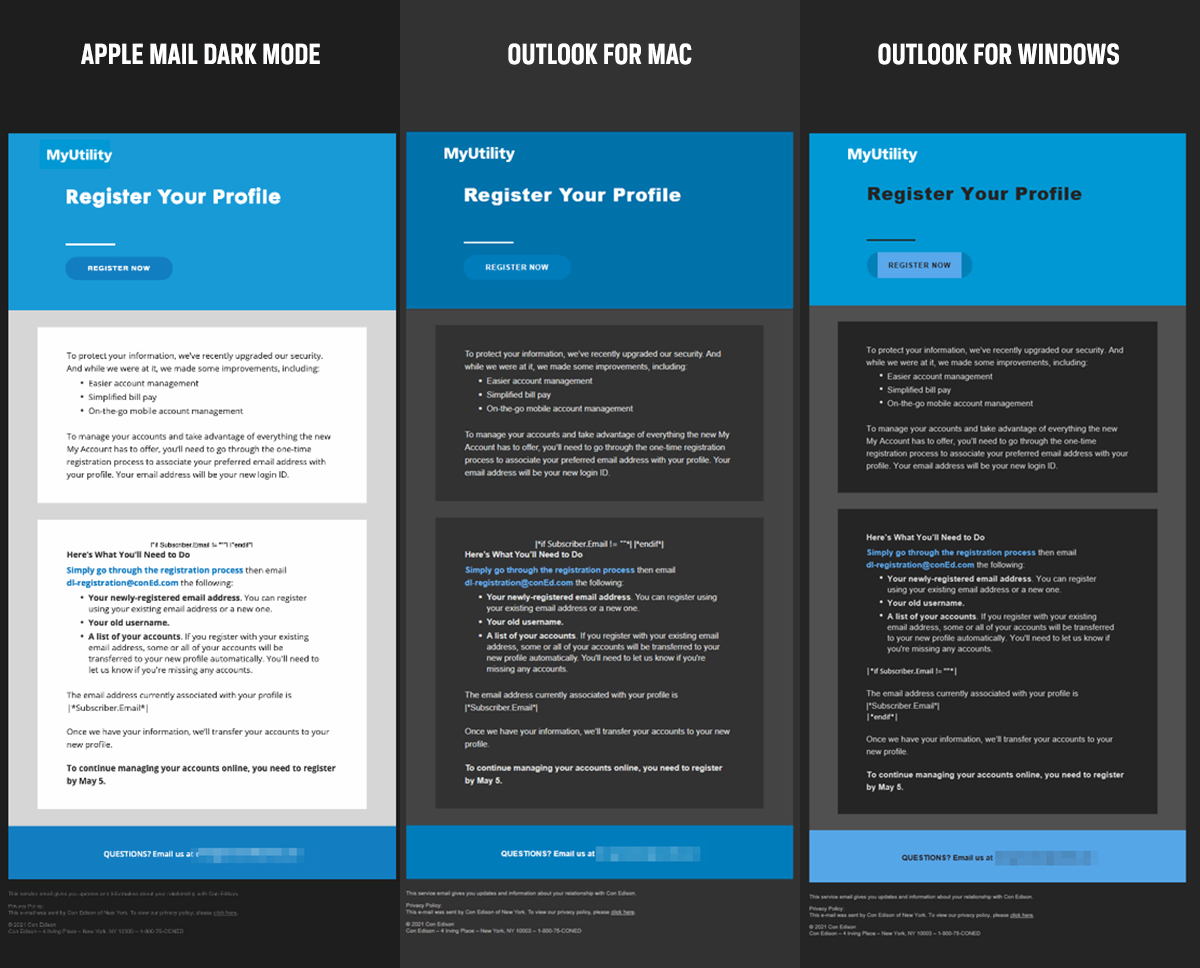
In addition, coding for dark mode needs to be at the forefront of development. Dark mode has become increasingly popular in the past few years. In fact, Price shares that over 80% of consumers who use Apple devices use dark mode. Therefore, it’s important to ensure your utility is checking how emails will look with dark mode rendering.

Example of dark mode email testing for different clients

Create more interactive emails

Interactive email continues to rise in popularity. In general, interactive content includes surveys, calculators or games. For email, interactive content simply means adding interest and movement so your messages stand out to customers.

“People like excitement in their inbox. They’re in their inbox every day so they need more visually exciting creative materials to keep their interest,” Farchione said.

Plus, the data doesn’t lie — interactive content is proven to generate five times more views than static content.

Ensure your emails are accessible

Focusing on email accessibility not only ensures that anyone is able to engage with the email, “it also makes the emails more pleasing and you see better engagement from all audiences when you use foundational accessibility techniques,” Price said.

She shared some tips to make emails more accessible:

  • Copywriting: Keep it concise and limit jargon
  • Design: Create a strong hierarchy, use white space and high contrast
  • Email code: Use semantic HTML and include alternative text for images

Showcase user-generated content

Data shows that consumers trust other consumers before they trust a brand. Because of this, both residential and business customers want to see the success of others. By including video testimonials or case studies, new customers can see firsthand experiences of the success of energy efficiency programs or marketplace purchases. Adding actual customer reviews directly in email is also a valuable way to prompt more action and improve click-through rates.

Utilize preference centers

Utilities obtain most of their customer data from contact information when they sign up for service. But what customers actually want and expect from utilities differs from this generic information. Preference centers are great tools for asking for details about a customer that might not be readily available when one signs up for service.

“With preference centers, you’re emailing them with content they actually want to get from you,” Price explained.

A few benefits of using preference centers includes:

  • Reduced unsubscribes
  • Showcasing email offerings
  • Increased engagement

Preference centers allow utilities to see which topics customers are interested in, or not interested in, and helps to tailor messages specifically for that individual.

Hyper-personalize your email campaigns

“Gone are the times of mass email messages,” Farchione said. “People want and expect content that fits their specific interests and needs.”

Hyper-personalizing communications makes customers more engaged and helps your utility reach its business goals. As Farchione pointed out, “Personalization drives performance and better outcomes.” In fact, data from Content Marketing World 2021 shows that 74% of customers are frustrated when information isn’t tailored to them.

Farchione shared an example of Questline Digital’s work with AEP Ohio on a segmentation strategy for the utility’s business eNewsletters. After adding targeted, industry-based audiences such as healthcare and education, the utility saw an 84% increase in engagement among its business customers.

Changes to open rates and privacy

Apple recently introduced Mail Privacy Protection, a privacy setting that hides IP addresses so senders can no longer see who opens an email, the time of open, location or type of device.

Although many utilities are concerned about these changes, Price reminds us to look back at the goals: “What was the goal of the actual email? The goal was never for customers to open it, the goal was for them to engage with it in some way.”

Price recommends expanding KPIs to better align them with long-term business goals. She suggests considering:

  • Email quality
  • Unique clicks
  • Account activity
  • Website visits

Prepare Your Marketing Strategy for 2022

As your utility looks ahead to the new year, consider these email marketing trends when planning your communications strategy.

Questline Digital can help your energy utility deliver more effective and engaging email communications.

After new customer onboarding, energy consumers are accustomed to receiving billing notices and outage alerts from their utility. While these are essential messages, you need more than just transactional communications to build a long-term positive relationship. Anniversary emails can help increase engagement by recognizing a meaningful touchpoint in the customer lifecycle.

What is a customer anniversary email?

Anniversary emails celebrate a customer’s annual milestone with their energy utility. A customer’s anniversary offers a chance to reach out one year post service enrollment and show that you care.

We recommend sending an anniversary email one year after a customer receives their first Welcome Series message. An easy addition to your email marketing strategy, these personalized messages are automatically sent to customers when they reach the one-year milestone.

Why should you send a client anniversary message?

Customer and client anniversary messages are known to boost engagement. Questline Digital data shows that customer anniversary emails achieve an 89% higher open rate than our baseline.

In addition to providing a reason to connect with customers, anniversary emails help to humanize your energy utility — something not possible with a program promotion or other transactional messages.

They are also the perfect tie-in with content marketing.

In addition to the celebratory message, you can share seasonal energy savings tips or promote a product. If a customer hasn’t yet used a service, this is a great time to remind them of what’s available or what’s new.

Make it extra personable by including a special discount and/or overview of individual energy use over the last year.

A customer anniversary email is especially great for first-time homeowners or customers that finally moved into the home of their dreams. Moving is a major milestone in everyone’s life and sending an anniversary email that offers congratulations, assistance and remembrance stands out. Your customers will appreciate this personalized message.

Customer anniversary email examples

Check out these anniversary email examples. They include a mix of product promotions, personalization and thanks.

Wemo

Wemo reaches out to customers one-year post initial purchase to offer a unique discount code. This not only reminds customers of their previous purchase, but it also highlights how they can continue turning their home into a smart hub with other Wemo products.

SHIPT

The grocery delivery company uses its annual client anniversary message to recognize accomplishments and encourage continued account growth. They highlight a customer’s key moments in the past year, making the recipient feel proud of the work they’ve done while also showcasing where they might have room for improvement.

Utility example

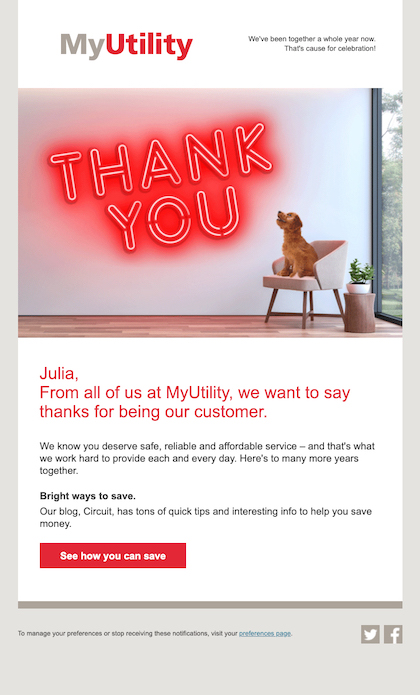
This Southwest utility says, ‘thank you’ and directs customers to available resources to help them save on energy. Just because a customer is celebrating their anniversary doesn’t mean they know about every available tool or program – it’s essential to remind them. The message is also populated with the customer’s name to make it more personal.

Example of customer anniversary email

Airbnb

Airbnb follows up with customers a year after they sign up for booking services to suggest travel destinations. Sometimes a timely reminder is all a customer needs to prompt action. Don’t miss the chance to celebrate your customer anniversary and encourage deeper engagement.

Setting up automated anniversary emails

When building your onboarding email cadence, add a customer anniversary message to the workflow. An anniversary email should be scheduled 365 days after your first Welcome message.

This added touchpoint makes customers feel special, gives your utility an opportunity to promote important content and services and is proven to boost overall engagement.

Learn how a Welcome Series and Anniversary Emails can build strong digital relationships with your energy utility customers.